Karma Dance
Karma Dance is an important folk dance of Madhya Pradesh. Madhya Pradesh has a rich tradition of songs and dance. The tribal population of the state indulge themselves in a lot of traditional performances and enjoys their leisure time singing and dancing. The songs and dances form an important event of the number of fairs and festivals that are held in Madhya Pradesh. The performing arts of Madhya Pradesh are wholly traditional and are not influenced by outside traditions and cultures. They are…
About Karma Dance
Karma Dance is an important folk dance of Madhya Pradesh. Madhya Pradesh has a rich tradition of songs and dance. The tribal population of the state indulge themselves in a lot of traditional performances and enjoys their leisure time singing and dancing. The songs and dances form an important event of the number of fairs and festivals that are held in Madhya Pradesh. The performing arts of Madhya Pradesh are wholly traditional and are not influenced by outside traditions and cultures. They are authentic of the tribal tradition and culture of the people residing in the state. These performances still bear the charm and essence of the old tradition.
India is an umbrella for the the vibrant tribal set, which describes the colorful art of living a life. The Swaying body and clapping hands follows the rhythm of drum-beats and speaks about the many dances involved in the tribal culture. One popular tribal dance form is the Karma type, highly performed by Adivasis residing at the interior of Chhattisgarh and Madhya Pradesh in India.
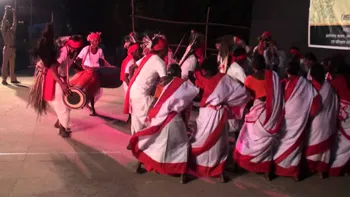
Karma Dance, Madhya Pradesh is mainly performed by the people who belong to the Gond tribe and Oraon tribe. These tribes reside in the north western part of Madhya Pradesh.. At the onset and the end of the rainy seasons the Karma Dance, Madhya Pradesh is performed. Although the full swing of the Karma Dance in Madhya Pradesh in India can be experienced in the month of August. The dance symbolizes the start of spring. The dance is mainly performed around the trees set in the villages.
Men and women both enthusiastically take part in this dance. The men and the women perform in various ways and the whole performance looks awesome. The men in the troupe leap forward whereas the women in the troupe bend low to the ground. The performers move their feet to and fro in perfect rhythm. Karma Dance of Madhya Pradesh is common to many ethnic groups of India. It is said that the Karma Dance, Madhya Pradesh is the oldest tribal dance among all tribal dances.
The instruments accompanied for the music during the Karma dance, Madhya Pradesh comprises of Thumki, the Payri, the Chhalla and Jhumki. There are many sub varieties of the Karma Dance which are as follows, The Sirki, the Jhumar, the Ghatwar, the Ektaria, the Pendehar, the Dohoari, the Lahaki and the Tegwani.This traditional dance is preformed specially during the Karma Festival held as per the Hindu month of Bhadrapada(August).
There are many varieties of Karma dance and the most popular varieties of the dance are Lahsua and Khare. Karma Dance is common among the Gonds and the Baigas. It is also one of the oldest dance form in India is the only dance form which is common to the many ethnic groups of India. The songs related with these variants diverge with each pattern. The Thadi, the Lahaki, the Khalha, the Jhumar and the Jharpat are the variations of Baiga Adivasis dance.
The dance derives its name from the Karma tree, which stands for fortune and good luck. The ritual starts with the planting of the trees. The dancers of both groups (men and women) form a circle and dance with their arms around each other’s waists.
Karam or Karma literally means ‘fate’. This pastoral dance is performed during the worship of the God or Goddess of fate (Karam Devta or Karamsani Devi), whom the people consider the cause of good and bad fortune. It begins from Bhadra Shukla Ekadasi (eleventh day of the brightmoon of the month of Bhadra) and lasts for several days. This is popular among the scheduled class tribes (e.g., the Binjhal, Kharia, Kisan and Kol tribes) in the districts of Mayurbhanj, Sundargarh, Sambalpur and Dhenkanal. In Dhenkanal and Sambalpur the dance is in honour of Karamsani, the deity who bestows children and good crops. However, the rituals connected with the dance remain the same everywhere. In the afternoon of the auspicious day two young unmarried girls cut and bring two branches of the ‘Karam’ tree from a nearby jungle. They are accompanied by drummers and musicians. The two branches are then ceremonially planted on the altar of worship and symbolise the God. Germinated grains, grass flowers and country liquor are offered to the deity. After completing the ritual the village-priest tells the story or legend connected with it. This is followed by singing and dancing in accompaniment of drum (madal), cymbal etc. The dance performance full of vigour and energy combined with charm of the youth decked with colourful costumes in exuberance of red cloth, set in peacock feathers skillfully designed ornaments made of small conch shells, brings the onlookers as well as the performers to a mood of trance and ecstasy. In this dance both men and women take part and continue to engross themselves for the whole night. The skillful movement of the young boys with mirror in hand indicates the traditional pattern of love-making in course of dancing and singing. The dance is performed sometimes by boys in group, sometimes by girls in group and sometimes both the sexes together.
During the dance they pass the branch of the tree. As the branch is washed with milk and rice, it should not touch the earth. The branch is then raised in the middle of the dancing arena. During the dance, the men leap forward to a rapid roll of drums. While women bend low to the ground with their feet moving in perfect rhythm to and fro, until the group of singers advances towards them.
Among the Gonds and the Baigas of Chhattisgarh and the Oraons of the north-west fringes of Madhya Pradesh, the Karma dance is very common. This form is associated with the fertility cult and essentially related to the Karma festival that falls in the month of August. The Karma dance symbolizes the bringing of green branches of the forest in the spring. Sometimes a tree is actually set up in the village and people dance round it.
The Majhwars of Sarguja district dance the Karma towards the beginning and the end of the rainy season. The Gonds and the Baigas of Mandla and Bilaspur districts dance it at any time they wish. The Sirki, the Ghatwar, the Jhumar, the Ektaria, the Pendehar, the Dohoari, the Tegwani and the Lahaki are some of the sub-varieties of the Karma dance.
Very young girls and children join in at the tail end to learn the steps. When the dancing grows fast the dancers of the tail end drop out to let the true dancers show their skill. The dancers hold hands in different ways in different dances. Sometimes they simply hold hands and sometimes hands are placed on the neighbor’s waist band or are crossed. It is the legs and the feet which play the principal part in the dance. The dance begins lightly with simple steps forward and backward, left and right, then gradually the steps grow smaller and faster, growing more and more complicated, until that dance reaches its height. Then it goes gradually to the first steps as the music leads to give dancers rest. The dancers have no special costume for the occasion. They dance with their usual attires which they wear daily. The dance is usually held in the courtyard of a village where performance is arranged. In the center of the courtyard a bamboo is fixed and it is split into four upto a certain height and then bent to form the arches. Each split is fixed with a pole on the outerside to form the earch. Then it is decorated with festoons of mango leaves and water lilies giving it a festive look. The ground is neatly plastered with cow-dung. Men and women dance winding in an out beneath the arches.
Karma Dance brings tells of vigor, energy, and color. Colorful costumes, peacock feathers, conch shells and assortments of different jewelry are a common sight amongst the performers. Sometimes only groups of women take part in the performance while at others it is only the men who can be seen performing. At others you will see dancers of both the sex. The main subject of the performers is nature, invocation to the Karma devi, pastoral beauty, love and humor. Sometimes young men could be seen with mirrors in their hands which is a symbolic representation of love making.
The Performing Arts of Orissa have different aspects. While some dances are ritualistic in essence, others are pastoral; still others are religious and war dances. Some of these dances are performed by professional artists and are classical forms which can be mastered with thorough practices. Some again are simple in rhythm and can be formed by all villagers without too much of technical skill. The Karma Dance Of Madhya Pradesh is a highly specialized dance form that is pastoral in essence.
Copyright 2016 HolidayLandmark All rights reserved
Best time to visit Karma Dance
As per event schedule; typically October-April
How to reach Karma Dance
Nearest airport: Raja Bhoj Airport, Bhopal (varies by location). Nearest railway station varies. Well-connected by state highway and regular bus services from major MP cities.
Timings & opening hours
Varies by festival/event; typically evening performances during fairs
Entry fee & tickets
Free at festivals; cultural shows INR 100-500
Duration needed
1-2 hours per performance
Location info
Madhya Pradesh, India.
Safety tips
Carry water, wear comfortable shoes, keep emergency contacts handy, supervise children
Things to carry
Comfortable clothing and shoes, water bottle, camera, sunscreen, hat, sunglasses, first aid kit
Nearby visiting places
Nearby attractions include local temples, monuments, and natural landmarks; check local tourism office.
Nearest airport, railway & bus
Nearest airport: Raja Bhoj Airport, Bhopal (varies by location).
Mobile network coverage
Airtel, Jio, BSNL, and Vi all provide coverage across Madhya Pradesh. 4G is reliable in Bhopal, Indore, Gwalior, Jabalpur, and along national highways. Coverage may be weaker in deep forest areas of Kanha, Bandhavgarh, and Pench national parks. Most hotels and resorts in tourist areas offer free Wi-Fi.
Food & restaurants nearby
Food options are available in the nearest town. Madhya Pradesh cuisine — dal bafla, poha, bhutte ka kees, Bhopali kebabs, and Indori namkeen — offers distinctive regional flavours.
Hotels & accommodation nearby
Accommodation is available in the nearest town or city. MP Tourism hotels and wildlife lodges offer reliable mid-range options across the state.
History of Karma Dance
Traditional folk dance form originating from the cultural traditions of Madhya Pradesh, passed down through generations.
Things to do at Karma Dance
Watch live performances; Participate in community dancing; Photography (with permission); Learn about dance history and style.
Things to visit & highlights
Nearby attractions include local temples, monuments, and natural landmarks; check local tourism office.
Climate & weather
Madhya Pradesh has a subtropical climate with three distinct seasons. Winter (October–March) is the best time to visit: temperatures range from 8°C to 28°C with clear skies and pleasant days — ideal for wildlife safaris and temple visits. April–June is very hot, with temperatures reaching 42–45°C in most areas. The monsoon (July–September) brings moderate to heavy rainfall, making the landscape lush green, though wildlife parks close during peak monsoon.
Helpline & emergency contacts
Police: 100, Ambulance: 108, Fire: 101; MP Tourism Helpline: 1800-233-1111; District helpline varies by location.
Nearest petrol pump
Petrol pumps available within 1-5 km of most tourist sites; major highways have regular fueling stations every 20-30 km. In remote areas, fill up at the nearest town before travelling.
Frequently asked questions
Where can I watch performances? At local festivals, cultural venues, and dedicated performance spaces in Madhya Pradesh cities.
Is the performance free or ticketed? Many festival performances are free to attend; dedicated cultural shows may cost INR 100-500 per person.
Can I take photographs during the performance? Photography is usually allowed but flash may be prohibited; it is polite to ask performers beforehand.
Quick facts
- Type: Destination
- State: Madhyapradesh
- Category: Music And Dance
Map & location view
This section is being updated and will be available shortly.
Photo gallery of Karma Dance
Video gallery
Related destinations
Ahiri Dance
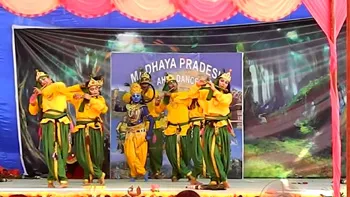
Ahiri Dance is a trademark of the cattle herders of Gwalior. The dance also has religious overtones, as the various communities of Gwalior who perform this dance…
Baredi or Yadav Dance
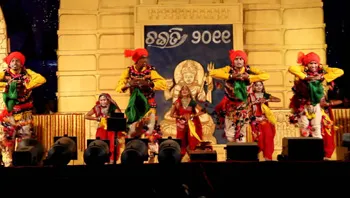
Baredi is an important folk dance of the Gwalior district. Staring from Diwali, the dance is performed till the day of 'Karthik Purnima'. A host of musical…
Chaitra festival dance
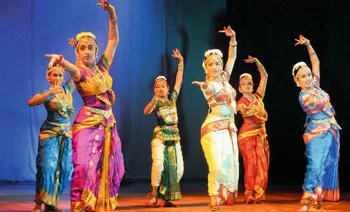
The Chaitra festival dance is another famous dance of the Gonds of Bastar district; it is performed after the harvest to thank goddess Annapurna for the harvest…