Noor Us Sabah Palace in Bhopal
This magnificent palace inside the Gwalior Fort was built by Raja Man Singh of the Tomar dynasty between 1486 and 1516. The palace can be reached by north eastern fort entrance. Because of the richly tiled and painted decorations with elephants and peacocks, and the exceptional fresco with the ducks paddling in turquoise waters, it is also known as Chit Mandir or Painted Palace.
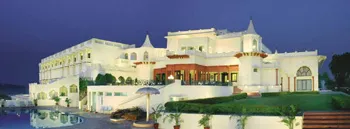
About Noor Us Sabah Palace in Bhopal
It consists of two open courts surrounded by apartments with carved stones, pillars. There are various rooms serving different purpose such as affairs of state, relaxation, decorated ornately with beautiful paintings, different figures of human beings, carved animals and flowers. The walls of these halls were decorated with triangular friezes.
This is one of the few architecture marvel in the fort that has withstood the test of time.
The Man Mandir in the 8th century was a citadel. The architecture of the Teli Temple inside the fort is spectacular. It is a tall vertical structure with a semi-cylindrical tower on top, similar to the architecture of the one found on the Vatal Deol Temple in Bhubaneshwar. The front mandapa is smaller than the shrine and the roof is attached to the main building. The carvings on the exterior of the temple are denser and of a higher quality than the interior. The design looks like a variation of the chaitya caves. The Chaturbhuja temple is a rare stone temple on the way up to the fort. This small temple carved out of sandstone reflects the architectural style of the 9th century Pratihara dynasty, like the temples inside the fort. The Sasbahu temple of Gwalior differs in the structural design from that of the Teli Temple, and is perhaps the style of the Katchyapagata dynasty, which came to power after the Pratihara Empire, weakened.
This palace has four levels, two of them are underground. Six rounded towers crowned with cupolas relieve this 80 feet high structure. The beauty is further enhanced by blue ceramic mosaic and petite trellis work.
History
Built in the 16th century, Man Mandir Palace at Gwalior occupies a significant place in Indian history. Built by Raja Mansingh is the Man Mandir Palace, built between 1486 and 1517. The tiles that once adorned its exterior have not survived, but at the entrance, traces of these still remain. There is a charming frieze here of ducks paddling in turquoise waters. Within, the palace rooms stand bare, stripped of their former glory, mute testimony to the passing of the centuries. Vast chambers with fine stone screens were once the music halls, and behind these screens, the royal ladies would learn music from the great masters of the day. Below, circular dungeons once housed the state prisoners of the Mughals. A heartrending ambiance of graciousness and valor of those days still loiters in the silent chambers this royal mansion.
Worn out by the passage of time, the interior of the palace is nearly empty. The exquisitely designed tiles adorn the exterior of the palace. The only fascinating feature in this palace is the nicely carved stonewalls of the vast chambers. One among the important spot in this palace is the Jauhar Pond, where the Rajput ladies committed sati. The circular prison in the palace had witnessed the brutal murder of Murad by the hands of his own brother.
Gwalior is said to have been established in the first century by a king named Suraj, who was cured of leprosy here by the saint Gwalipa with the water from Suraj Kund (at the fort). Out of appreciation, the king named the fort Gwalior. Gwalipa gave the king the name Suhan Pal and told him that his descendents would remain in power as long as they retained the new name. When the 84th descendent changed his name to Tej Karan, the kingdom was lost.
The Emperor Aurangzeb had his brother, Murad, imprisoned, and later executed, here. Close by is Jauhar Pond, where in the Rajput tradition, the ‘ranis’ committed mass ‘sati’ after their consorts had been defeated in battle. Though the major portions of the Fort were built in the 15th century, references to this gigantic complex can be traced back to 425 AD. Older than the city is the Suraj Kund within the Fort walls, the original pond where Suraj Sen, or Suraj Pal as he was later known, was cured by the Saint Gwalipa.
Though the palace had not survived the beatings of time, it hold its elegance and lend a hand to the visitor to go back to the medieval period.
Over the years, the Rajputs, Delhi Sultans, Mughals, Marathas, and the British controlled the fort. At the end of the 14th century, the Tomar dynasty took control of Gwalior. The Tomars, a Rajput group, defended the fort against the Delhi Sultans in 1505 while many of their neighbors were defeated. In 1516, the fort was attacked by Ibrahim Lodi of Delhi and finally captured a year later. The Mughals later took the fort and in 1754, the Marathas captured it. The British and Marathas fought over the fort for the next fifty years. Eventually, the Scindias (one of four main ruling families of the Marathas) took control, under British direction.
During the Uprising of 1857, the Maharaja of Gwalior backed the British, although his troops revolted. When the British retook the fort, the Rani of Jhansi was killed while courageously charging out to battle.
The most historic event was the sacrifice of Rani Lakshmibai, the Rani of Jhansi. Titled as the Joan of Arc, she was one of the leaders of the Indian Rebellion of 1857. Among many battles, the most important battles against the British were in 1858. She leaded the troops to protect the fort and city, but was killed in the second battle.
Nearest Visiting places
The must visit temples in the complex includes Saas Bahu Temple. These are two pillared temples standing next to each other. Built in 9th century, one is bigger than the other. The Chaturbhuj Mandir is essentially a Vaishnavite shrine. Another famous temple within the fort is Teli ka Mandir. Also called the ‘Oilmans’ temple, it was initially a Vaishnavite shrine, but has now been used to worship Lord Shiva. The architecture of this temple is quite unusual, as there are no pillared Mandapa or pavilions, rather a Buddhist barrel vaulted roof.
Another fascinating royal monument in the city is Man Mandir Palace. It was built between 1486 and 1517 by Raja Mansingh. Though the place has lost its age old glory to a great extent, its ruins still enchants the visitors. It houses majestic structures like vast chambers, dancing halls, grimy dungeons etc. It even has a Jauhar pond, wherein the queens committed sati (suicide) after their consorts lost battles. The otherwise tranquil and deserted palace comes to life with the Son-et-Lumiere, every evening.
Jai Vilas Palace and Museum is one of the most interesting places in Gwalior. It is the current residence of Scindia family. The 25 grand rooms of the palace have been converted into museum. It includes the personal effects of the royal family, such as silver train with cutglass wagons, glass cradle for baby Krishna, silver dinner services and swords belonging to Aurangzeb and Shah Jahan. Moreover, it also displays personal mementoes, gifts, hunting trophies and portraits belonging to the Scindia family. Other places to see in Gwalior are Tomb of Ghaus Mohammed and Tansen, Gujari Palace, Sun Temple etc.
Things to carry
Cell Phone
Water bottles
Digital Camera
Tips & Suggestions
Most of the Museums are Closed on Mondays and Public Holidays. Plan your Day Accordingly.
Help Line/Phone Number
Police Station:
1.Central Jail
Ghosipura, Gwalior, Madhya Pradesh 1.9 km
2.Padav Police Station
Tansen Road, Gandhinagar, Gwalior, Madhya Pradesh 2.0 km
**
3.SP Office**
Gwalior, Madhya Pradesh 3.2 km
4.Police Station
Gwalior, Madhya Pradesh 5.0 km
5.Morena Police Station
Jiwaji Ganj, Morena, Madhya Pradesh 34.0 km
Nearest Hospital:
1.Koteshwar Hospital
Gwalior, Madhya Pradesh 850 m
2.ESI Hospital
Gwalior, Madhya Pradesh 1.9 km
3.JC Hospital
2.0 km
4.Mental Hospital
Ghosipura, Gwalior, Madhya Pradesh 2.2 km
5.MARC Hospital
Gwalior, Madhya Pradesh 3.5 km
Society/Community Phone Number
Copyright 2016 HolidayLandmark All rights reserved
Location info
-
Address: Gwalior, Madhya Pradesh, India.
-
District:
Nearest City: Bhopal, Sanchi, Gwalior, Ujjain, Indore, Jhansi, Omkareshwara, Maheshwar, Chitrakoot, Orchha, Khajuraho, Jabalpur, Kanha National Park, Panchamarhi, Mandu, Bandhavgarh National Park.
- Best time to visit: October to March
Climate & weather
Summer - (Mar-June), Monsoon - (Jul-Sep), Winter - (Oct-Feb)
The city of Gwalior faces extremes of temperatures. Temperature during the summers touches a high of 46 degrees centigrade while in winters it drops down to a minimum of 5 degrees. Monsoons arrive in the first week of June and continue until September.
Things to do at Noor Us Sabah Palace in Bhopal
Watching the Pierced Stone Techniques of the Tomb of Ghous Mohammed.
Things to visit & highlights
The Fort, Jai Vilas Palace and Museum, Man Mandir Palace, Saas Bahu Temple, Teli ka Mandir etc
Hotels & accommodation nearby
Usha Kiran Palace, The Central Park, Gwalior Regency, Hotel Landmark, Hotel Tansen Gwalior.
Nearest petrol pump
1.Petrol Pump
New Colony, Gwalior, Madhya Pradesh 1.2 km
2.Petrol Pump
Kalpi Road, Morar, Gwalior, Madhya Pradesh 4.1 km
3.Ashok Guptas Petrol Pump
Gandhinagar, Gwalior, Madhya Pradesh 1.9 km
4.Petrol Pump
Gwalior, Madhya Pradesh 4.6 km
5.Petrol Pump
Gwalior, Madhya Pradesh 5.2 km
Best time to visit Noor Us Sabah Palace in Bhopal
Summer - (Mar-June), Monsoon - (Jul-Sep), Winter - (Oct-Feb)
The city of Gwalior faces extremes of temperatures. Temperature during the summers touches a high of 46 degrees centigrade while in winters it drops down to a minimum of 5 degrees. Monsoons arrive in the first week of June and continue until September.
Timings & opening hours
9:00 AM to 5:00 PM daily
Entry fee & tickets
Check local listings
Duration needed
1-2 hours
Safety tips
Follow general safety guidelines; check local conditions before visiting
Nearest airport, railway & bus
Usha Kiran Palace, The Central Park, Gwalior Regency, Hotel Landmark, Hotel Tansen Gwalior.
Mobile network coverage
Airtel, Jio, BSNL, and Vi all provide coverage across Madhya Pradesh. 4G is reliable in Bhopal, Indore, Gwalior, Jabalpur, and along national highways. Coverage may be weaker in deep forest areas of Kanha, Bandhavgarh, and Pench national parks. Most hotels and resorts in tourist areas offer free Wi-Fi.
Food & restaurants nearby
Food options are available in the nearest town. Madhya Pradesh cuisine — dal bafla, poha, bhutte ka kees, Bhopali kebabs, and Indori namkeen — offers distinctive regional flavours.
Frequently asked questions
What is the best time to visit? October to March for pleasant weather.
How do I get there? MP is well-connected by road, rail, and air from all major Indian cities.
Are there guides available? Local guides are available at most tourist sites.
What facilities are available? Basic facilities including parking, restrooms, and refreshments are generally available.
Accessibility
Accessibility information is not currently available for this site. Contact the venue directly or check with your accommodation for the latest accessibility details.
Rules & restrictions
Standard visitor rules apply. Check locally for any specific restrictions at this site.
Best photography spots
The best photography spots are typically during the golden hours (early morning and late afternoon). Scout the location first to identify the best angles, and consider the direction of light at different times of day.
Quick facts
- Type: Tourist Attraction
- State: Madhyapradesh
- Category: Forts
Visitor information
Please check locally for current visitor information.
How to reach Noor Us Sabah Palace in Bhopal
Nearest Railway Station:Gwalior is one of the major commercial railway stations of North-Central Railway. It has three stations and lies on the longest broad gauge line between Delhi and Mumbai. Thus, reaching Gwalior by train is quite convenient.
Map & location view
This section is being updated and will be available shortly.
Photo gallery of Noor Us Sabah Palace in Bhopal
Video gallery
Related destinations
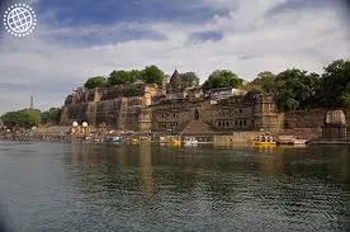
Ahilya Fort
Ahilya Fort at Maheshwar (Madhya Pradesh, India) is an experience straight out of the 18th century. Situated high above the banks of the sacred Narmada River,
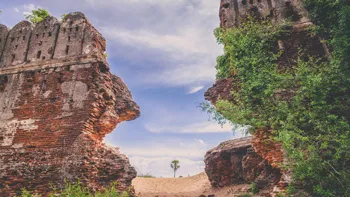
Alamparai Fort
Backwaters is very scenic- Good and safe for a swim. Local fisherman offer to take you for a ride on the boat-charges will be in the range of Rs. 200-500 for 30…
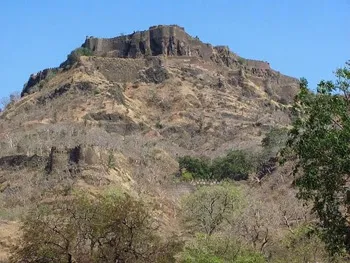
Asirgarh Fort
The Chanderi Fort is located in the small historical town of Chanderi in the Ashoknagar District of Madhya Pradesh. The Chanderi Fort is the most conspicuous…