Mhow Fort
Mhow is famous for its mild and pleasant weather, unspoilt countryside and the cool evening breeze known as Shab-e-Malwa which makes the summers less harsh and so much more tolerable. Some of the picnic spots in and around Mhow are: Patal Pani waterfalls, Choral dam, Nakheri dam, Beircha lake, the lakes near Mhow fort, Yashwantnagar Talaab, Janapav temple in Kuti Village, Sitlamata temple and falls (in Manpur, 20 km from Mhow).
About Mhow Fort
Mhow (Hindi:महू) is a small cantonment town in the Indore District of the Malwa region of Madhya Pradesh state, India. It is located 23 km south of Indore city towards Mumbai on the Agra-Mumbai Road. The city was renamed to Dr Ambedkar Nagar in 2003, by the Government of Madhya Pradesh.
There is total lack of unanimity on how Mhow got its name. There are many theories about this. But there is no confirmation about which theory is true. Here are some of these in no particular order.
MHOW stands for ‘Military Headquarters Of War’.
MHOW stands for ‘Military Headquarters Of Western India’
It is said that the village near Mhow has been called Mhow Gaon since time immemorial. Thus the Cantonment which came up in 1818 came to be known as Mhow Cantt.
The mahua tree which grows in profusion in the forests around Mhow has also been mentioned as a possible source for the name of this town.
History
This cantonment town was founded in 1818 by Sir John Malcolm as a result of the Treaty of Mandsaur between the English and the Holkars who ruled Indore. Sir John Malcolm’s forces had defeated the Holkars at the Battle of Mahidpur in 1818. It was after this battle that the capital of the Holkars shifted from the town of Maheshwar on the banks of the Narmada to Indore.
Mhow used to be the headquarters of the 5th Division of the Southern Army during the British Raj. Today this small town is associated with the Indian Army and with Dr. Bhimrao Ramji Ambedkar, a political leader who was born here. MHOW is an acronym for “Military Headquarters of War”
Mhow was a major railway division during the British Raj and till a few years after independence. Later the resources were shifted to Ratlam and Ajmer.The irony is that Mhow still has no broad gauge railway.
According to mythology Mhow is also said to be the birthplace of Parashurama - an avatar of Vishnu, the Hindu God of Sustenance.
The Indian Army and Mhow
Mhow and the Indian Army are inseparable. The Army has been here since 1818. Till World War II Mhow used to be the headquarters of the 5th Division of the Southern Army (a Division comprising only British units). According to local legend Winston Churchill had also spent a few months in Mhow when he was a subaltern serving with his regiment in India. The house on the Mall where he is supposed to have lived has gradually crumbled due to neglect and age. It has been pulled down and a jogger’s park has been built on its grounds by Infantry School Mhow.
Mhow is synonymous with the Indian Army and has been a training centre of the Army since the British days. It houses three premier training institutions: (i) The Infantry School - the alma mater of the Indian Infantry which is the spearhead of the Indian Army (ii) The Military College of Telecommunication Engineering (MCTE), the alma mater of the Corps of Signals. The Corps of Signals is like the nervous system of the Indian Army as it is responsible for communications. (iii) The Army War College(formerly known as the College of Combat). These three institutions together form the backbone of Mhow. Each of these institutions is headed by a Lieutenant General.
The Infantry School, Mhow
The Infantry School Mhow conducts courses related to the infantry for men and officers of the various regiments of the Indian Army. The Commando Wing of this school is in Belgaum, Karnataka. The Army Marksmanship Unit (AMU) which has produced many medal winning shooters for the Army and for India is a part of The Infantry School Mhow. Field Marshal Sam Maneckshaw had served as the Commandant of this school in the fifties while he was a Brigadier.
MCTE Mhow
MCTE was known as the School of Signals till 1967. It is the alma mater of the Corps of Signals. MCTE conducts telecommunications and Information Technology courses for officers, JCOS, NCOs and soldiers of the Indian Army. Officers and men from other countries also attend courses here. It also trains gentlemen cadets for a Bachelors degree in engineering. These cadets get commissioned into the Indian Army’s Corps of Signals on completion of their training. They are known as the ‘Information Warriors’ of the Indian Army.
Army War College, Mhow
The Army War College was known as the College of Combat till a few years ago. The Army War College conducts three coursesâ€â€the Junior Command (JC) course, the Senior Command (SC) course and the Higher Command (HC) course. The former Chief of Army Staff General K. Sundarji was the Commandant of the College of Combat during the early eighties. His successor General V.N. Sharma also served as the Commandant of the College of Combat.
ARTRAC - Army Training Command
The Army Training Command or ARTRAC was born in Mhow in 1991 before it shifted to Shimla (Himachal Pradesh) in 1994. At that time its General Officer Commanding in Chief (GOC-in-C) was Lt. General Shankar Roy Chowdhary who went on to become the Chief of Army Staff (COAS). Its first GOC-in-C was Lt. General A.S. Kalkat who had earlier commanded the Indian Peace Keeping Force (IPKF) in Sri Lanka.
Attending a course in Mhow is something every Army officer looks forward to with eagerness and enthusiasm.
Things to carry
Water Bottles
Hats/Caps
Cell phone
Digital camera
Help Line/Phone Number
Copyright 2016 HolidayLandmark All rights reserved
Location info
-
Address:
-
District:
-
Nearest City:
-
Best time to visit:
How to reach Mhow Fort
-
Nearest Railway Station:
-
Nearest Airport:
-
Road Transport:
Nearest petrol pump
1.Petrol Pump
Indore, Madhya Pradesh 14.9 km
2.Petrol Pump
Indore, Madhya Pradesh 14.9 km
3.Petrol Pump
Madhya Pradesh 15.5 km
4.Petrol Pump
Madhya Pradesh 15.6 km
5.Petrol Pump
Madhya Pradesh 16.4 km
Best time to visit Mhow Fort
October to March; avoid summer heat (April-June)
Timings & opening hours
9:00 AM to 5:00 PM daily; closed on Mondays
Entry fee & tickets
INR 25 for Indians, INR 300 for foreign nationals; additional INR 25 for camera
Duration needed
2-3 hours
Safety tips
Wear comfortable walking shoes; carry water; be cautious on steep steps and uneven surfaces; avoid climbing restricted areas
Nearby visiting places
Historical monuments, palaces, museums, and local markets within the city
Nearest airport, railway & bus
Accommodation options available in the nearest town/city. MP Tourism hotels, private resorts, and budget lodges are available near major tourist destinations. Advance booking recommended during peak season (October-March).
Mobile network coverage
Airtel, Jio, BSNL, and Vi all provide coverage across Madhya Pradesh. 4G is reliable in Bhopal, Indore, Gwalior, Jabalpur, and along national highways. Coverage may be weaker in deep forest areas of Kanha, Bandhavgarh, and Pench national parks. Most hotels and resorts in tourist areas offer free Wi-Fi.
Food & restaurants nearby
Forts in MP (Gwalior, Mandu, Orchha) have snack stalls and chai points near the entrance. Gwalior and Mandu have the best food options near their fort complexes. The nearest town offers traditional meals — dal bafla, poha, and kebabs.
Hotels & accommodation nearby
Orchha, Gwalior, and Mandu have heritage hotels and guesthouses near their fort complexes. Gwalior and Bhopal offer the widest range from budget to luxury.
Things to do at Mhow Fort
Explore the fort ramparts and bastions, visit the palace chambers and durbar halls, photograph the architecture, watch the sound and light show (if available), and enjoy panoramic views from the top.
Things to visit & highlights
Palace complex, museum (if within fort), ramparts and viewpoints, nearby temples and stepwells, and the old city area around the fort.
Climate & weather
Madhya Pradesh has a subtropical climate with three distinct seasons. Winter (October–March) is the best time to visit: temperatures range from 8°C to 28°C with clear skies and pleasant days — ideal for wildlife safaris and temple visits. April–June is very hot, with temperatures reaching 42–45°C in most areas. The monsoon (July–September) brings moderate to heavy rainfall, making the landscape lush green, though wildlife parks close during peak monsoon.
Frequently asked questions
What is the history of this fort? Most MP forts date back to the medieval period, built by Rajput or Maratha rulers between the 10th and 18th centuries.
How much time is needed to explore? Typically 2-3 hours for a thorough visit.
Is there a guide available? Local guides are available at the entrance; audio guides may also be available.
Are there food facilities inside? Basic refreshment stalls are usually available; full meals are available nearby.
Accessibility
Historic forts typically have uneven stone pathways, steep staircases, and no ramps. Forts are built on elevated ground — reaching them requires a climb on foot or by vehicle to the base followed by stairs. Visitors with mobility issues may find the outer grounds and lower levels more accessible than the upper ramparts. Wear sturdy footwear and allow extra time.
Rules & restrictions
Do not climb on unstable walls or beyond marked boundaries. Some bastion platforms are partially collapsed. Graffiti and defacement are illegal. Alcohol and smoking are not permitted inside most historic sites. Drones may require permission. Large bags may be checked at the entrance. Photography is permitted but tripods may need special permission. Respect heritage rules — these monuments are protected under the Ancient Monuments and Archaeological Sites and Remains Act.
Best photography spots
The ramparts offer the best panoramic views — arrive early morning or late afternoon for golden light across the landscape. The bastions and arched windows make excellent natural frames. Wide-angle lenses capture the scale of the fortifications; telephoto lenses isolate details of the stonework and distant views. Sunset silhouettes of the fort walls against the sky are iconic.
Quick facts
- Type: Tourist Attraction
- State: Madhyapradesh
- Category: Forts
Visitor information
Please check locally for current visitor information.
Photo gallery of Mhow Fort
Photos coming soon. In the meantime, you can find images of Mhow Fort on popular travel photography sites and social media.
Map & location view
This section is being updated and will be available shortly.
Photo gallery of Mhow Fort
Video gallery
Related destinations
Ahilya Fort
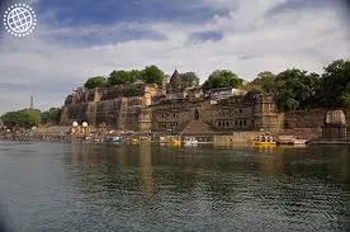
Ahilya Fort at Maheshwar (Madhya Pradesh, India) is an experience straight out of the 18th century. Situated high above the banks of the sacred Narmada River,
Alamparai Fort
Backwaters is very scenic- Good and safe for a swim. Local fisherman offer to take you for a ride on the boat-charges will be in the range of Rs. 200-500 for 30…
Asirgarh Fort
The Chanderi Fort is located in the small historical town of Chanderi in the Ashoknagar District of Madhya Pradesh. The Chanderi Fort is the most conspicuous…