Gwalior Fort
Described as 'the pearl in the necklace of the castles of Hind' by the Mughal Emperor Babur, the Gwalior Fort was mightier than any other fort in the medieval ages. Naturally every powerful ruler dreamt of possessing it. It has fascinated historians and poets alike down the ages, and continues to do so. It also tickles one's curiosity because its origin is shrouded in mystery.
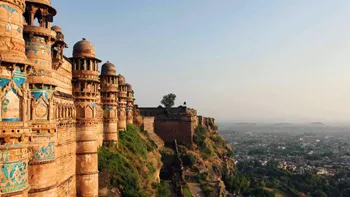
About Gwalior Fort
About Gwalior Fort
The Gwalior fort, situated at Gopachal, almost 100m above the town of Gwalior, was built by Raja Man Singh Tomar in the 15th century. It’s width is not more than 1km and the walls, encircling the fort, are solid and about 10m high. It covers an area of 3 sq. kms and consists three temples, six palaces and a number of water tanks. It is considered as North and Central India’s most secure fort. Babur, the great Mughal emperor described the fort as, “The pearl amongst fortresses in India”. The fort also has an unlimited water supply, as there are many water tanks on the plateau.
This fort was owned by many rulers like the Tomars, Mughals, Marathas and British, who finally handed it over to the Scindias. The southern path of the Gwalior fort is delimited by rock faces with intricate carvings of the Jain Tirthankars. Some of the temples in the Gwalior Fort are the Teli-ka-Mandir- a 9th century Dravidian-style shrine which is notable for its profusely sculpted exterior standing next to it are the Saas-Bahu Temples and the Chaturbhuj Mandir, a Vaishnavite shrine dating back to the 9th century.
The fort’s most eminent palaces are the amazingly ornate Man Singh Palace, built by Man Singh in the 15th century. Then there’s the Jauhar Kund, which marks the spot where the women of the harem burnt themselves to death after the defeat of the king of Gwalior in 1232.
Gwalior Fort Other palaces within the Gwalior Fort which are worth seeing include the Karan Palace, the Jahangir Mahal, the Shahjahan Mahal and the Gujri Mahal (the latter was built by Man Singh for his favourite queen, Mrignayani)
The Gwalior Fort has changed hands many times, from the Tomaras in the 8th century, to the Scindhias who were its masters when India became independent. and each of these dynasties adorned and embellished the fort.
One cannot help being impressed with the perfect blend of the Hindu and Muslim architecture that characterises the fort and finds its fullest expression in this brilliant monument.
Location info
Best time to visit: November to February
The best time to visit Gwalior is the winter, from the end of October to early March. The last weeks of December and early January are the coldest time of the year here, and can be a good time to visit Gwalior. Summers should be avoided, if possible, as it gets extremely hot. For those who are musically inclined, the annual Tansen Festival- a celebration of Indian classical music- is held in Gwalior every November, and is worth attending.
History
History of the fort is indelibly linked to the former kingdom of Gwalior, ruled by several Rajput kings. The earliest dating of the fort is quoted to a publication of the Government of India on Gwalior, which traces it to an inscription of 525 AD in a Sun temple, which is said to have been built by the Hun (Huna) emperor Mihirakula (Sveta Huna ruler in 510 AD during the reign of Huns in India).[6]
The Chaturbhuj temple (dediciated to a four armed Hindu god, a Vishnu) temple, on the way to the fort is dated to 875 AD which has close identity with the Teli-Ka-Mandir, which is also dated to the 8th century.[7]
Historical research has dated construction of the fort to 773 AD by a local chieftain of the area named Surya Sena. In 1023 AD Mahmud of Ghazni attacked to capture the fort but was repulsed. In 1196 AD, after a long siege, Qutubuddin Aibak. the first Sultan of India took over the fort but he lost it in 1211 AD. It was reconquered in 1231 AD by Sultan Iltumish, the slave dynasty ruler of Delhi. When Timurlane invaded Delhi and created anarchy in the region, Narasingh Rao, a Hindu chieftain captured the fort. It was only in 1519 that Ibrahim Lodi of the Lodi Dynasty won control of the fort. Subsequent to his death, Mughul emperor Babar manipulated the situation and took control of the fort. But with his son Humayun’s defeat at the hands of Sher Shah Suri, the fort came under the reign of Suri dynasty.
After Sher Shah Suri’s death in 1540, his son Islam Shah shifted his capital from Delhi to Gwalior as it was considered safe from the frequent attacks from west. In the year 1553, when Islam Shah died his incumbant Adil Shah Suri appointed the Hindu warrior Hemu also known as Hem Chandra Vikramaditya as the Prime Minister-cum-Chief of Army of his kingdom. Adil Shah himself moved to Chunar as it was considered still safer. Hemu mounted several attacks from this fort to quell the rebellion in various parts of North India against the weak Adil Shah regime. The fort remained very active during 1553-56 as Hemu had fought and won 22 battles continuously, without losing any from this fort. After defeating Akbar’s forces at Agra and Delhi in 1556, Hemu established ‘Hindu Raj’ as a ‘Vikramaditya’ king, in North India and had his ‘Rajyabhishake’ or coronation at Purana Quila in Delhi as ‘Samrat Hem Chandra Vikramaditya’ on 7th Oct. 1556. The capital was shifted from Gwalior to Delhi once again and was operational from Purana Quila.
Then Akbar captured the fort and made it a special prison for important prisoners. In this prison fort in the Mughal Dynasty period, there was a saga of several unfortunate royal prisoners who were put to death; notably among them were: Akbar confining his first cousin Kamran here and subsequently putting him to death; Aurangzeb imprisoning his brother Murad and later killing him; similarly Aurnagzeb had his brother Dara Shikoh’s sons, Suleman and Sepher Sheko, executed here.[8]
Following the decline of Mughal Empire, the fort was usurped by Gohad dynasty by a Jat Rana (King)).[8] Thereafter, the fort’s control under went a series of changes. In 1736, Maharaja Bhim Singh Rana, the Jat king won over Malwa and the Gwalior fort by defeating the Marathas and held the fort from 1740 to 1756. In 1779, it was won by the Sinde who stationed a garrison here. But it was usurped by the East India Company. But in August 1780, the control went to Chhatar Singh, the Rana of Gohud who defeated the Marathas. In 1784, Mahadji Sinde ( Commander of Maratha Empire) once again recovered the fort. There were frequent changes in the control of the fort between the Sindes and the British between 1808 and 1844. However, in January 1844, after the battle of Maharajpur, the fort finally came under the control of the Sindes, more as protectorate of the British government.[9]
But the most significant event in Indian history that occurred at Gwalior fort was the sacrifice of Rani Lakshmibai, the Rani of Jhansi. She has been hailed as one of the leading figures of the Indian Rebellion of 1857, and as a symbol of resistance to British rule in India. She is a legendary figure, regarded as India’s “Joan of Arc”. She fought many battles but two battles are most noteworthy. The first battle against the British was at Jhansi in April 1858 (Lakshmi Bhai was defeated) and she escaped to form a rebel group. The other more famous battle was fought at Gwalior fort against the Sinde’s (feudatory of the British), which initially she and her confederates (Rani Jhansi( Widow of commander of Maratha Empire), the Peshwas and the Nawab of Banda) won on 1 June 1858 and Nana Saheb was installed as the [[Peshwa-Prime Minister of Maratha empire)). But Sinde fled to Agra. However, the British continued to relentlessly attack the Gwalior fort. In the battle that ensued on 16 and 17 June 1858, Lakshmi Bai led the troops of Jhansi and the Gwalior (left over forces) to defend the mountain passage to the fort and the city of Gwalior. In the cavalry charge made by the British, she was killed
Nearest Visiting places
Jai Vilas Palace
This Palace was built in 1809 and is located in new city of Gwalior. The present Maharaja of Gwalior resides heres.
Mausoleum of Ghaus Mohammed
Ghaus Mohammed’s sand stone mausoleum is laid in the old town of Hazira. He was an Afghan Prince who turned sufi saint and he had helped Babur to win the Gwalior fort. His mausoleum is designed according to ancient Mughal architecture. Particularly exquisite are the screens using pierced stone technique. The carvings on these screens are as delicate as lace.
Sun Temple
Located near the residency at Morar. The architecture of this temple is based on the lines of the Konark temple.
Tomb of Tansen
Tansen, the Father of Indian classical music and one of the nine Gems in Akbar’s court is buried in Gwalior. This great singer’s memorial carry’s a very simple tone in itself and is surrounded by gardens on its sides. This monument is a part of Gwalior’s cultural heritage. Every year a music festival is organised here. The festival is held in November / December and attracts singers and musicians from all over India.
Hotels/Lodge/Accommodation
1.Hotel Surbhi
2.Hotel Gwalior Regency
3.Tansen Residency
4.Usha Kiran Palace Hotel
TAJ Group Hotel : Usha Kiran Palace is the best Hotel of Gwalior city. Usha Kiran Palace is about 120-years old palace, hosted King of England. It is spread over an area of 9 acres of land. Being a heritage hotel in Gwalior, it has 40 rooms and just 3 kms from railway station and 25 kms from Gwalior-Ariport (IATA Code: GWL). It is located in Jayendraganj Lashkar area of Gwalior city.
In addition to it, other luxury hotels in Gwalior city are : Central Park Hotel, Land Mark, Hotel Shelter, Gwalior Regency, Hotel Tansen etc. Similarly one can find budget or economy hotels in Gwalior also like : Hotel Suruchi, Surbhi, Sita Manor etc. Hotel Suruchi is just 2 kms from railway station and 10 kms from Gwalior Fort.
Help Line/Phone Number
Police Station:
**1.Central Jail
Ghosipura, Gwalior, Madhya Pradesh 1.3 km
2.Padav Police Station
Tansen Road, Gandhinagar, Gwalior, Madhya Pradesh 1.5 km
3.Police Station
Gwalior, Madhya Pradesh 4.2 km
4.SP Office
Gwalior, Madhya Pradesh 2.8 km
5.Nihalganj Police Station
Dhaulpur, Rajasthan**
Copyright 2016 HolidayLandmark All rights reserved
Climate & weather
The city of Gwalior faces extremes of temperatures. Temperature during the summers touches a high of 46 degrees centigrade while in winters it drops down to a minimum of 5 degrees. Monsoons arrive in the first week of June and continue until September. October to March is the best time to pay a visit to Gwalior.
Things to visit & highlights
Water tanks,rock faces with intricate carvings of the Jain Tirthankars, Annual Musical Fest etc.
How to reach Gwalior Fort
-
Nearest Railway Station:Gwalior is on the main Delhi to Mumbai railway line. The superfast Shatabdi express links it with Delhi.
-
Nearest Airport:Indian Airlines operates a flight to Gwalior from Delhi.
-
Road Transport:There are regular bus services from Gwalior to Agra, Jhansi, Shivpuri, Indore, Bhopal and Jabalpur.
Nearest petrol pump
1.Petrol Pump
New Colony, Gwalior, Madhya Pradesh 1.6 km
2.Ashok Guptas Petrol Pump
Gandhinagar, Gwalior, Madhya Pradesh 1.2 km
3.Ashok Guptas Petrol Pump
Gandhinagar, Gwalior, Madhya Pradesh 1.2 km
4.Sainik Petrol Pump
Racecourse Road, Gwalior, Madhya Pradesh 2.2 km
5.Hindustan Petroleum
Lashkar, Gwalior, Madhya Pradesh
Best time to visit Gwalior Fort
October to March (pleasant weather)
Timings & opening hours
9:00 AM - 5:00 PM daily (some forts closed on national holidays)
Entry fee & tickets
INR 25 (Indians), INR 300 (foreigners); free for children below 15
Duration needed
2-3 hours
Safety tips
Wear comfortable shoes; Watch your step on uneven paths; Carry water; Avoid climbing restricted areas
Things to carry
Comfortable walking shoes, hat/cap, sunscreen, water bottle, camera, sunglasses
Nearest airport, railway & bus
Nearest airport: Gwalior Airport (12 km).
Mobile network coverage
Airtel, Jio, BSNL, and Vi all provide coverage across Madhya Pradesh. 4G is reliable in Bhopal, Indore, Gwalior, Jabalpur, and along national highways. Coverage may be weaker in deep forest areas of Kanha, Bandhavgarh, and Pench national parks. Most hotels and resorts in tourist areas offer free Wi-Fi.
Food & restaurants nearby
Forts in MP (Gwalior, Mandu, Orchha) have snack stalls and chai points near the entrance. Gwalior and Mandu have the best food options near their fort complexes. The nearest town offers traditional meals — dal bafla, poha, and kebabs.
Things to do at Gwalior Fort
Water tanks,rock faces with intricate carvings of the Jain Tirthankars, Annual Musical Fest etc.
Frequently asked questions
What are the fort visiting hours? Typically 9:00 AM to 5:00 PM daily; some forts remain closed on national holidays.
Is there a guide available at the fort? Yes, licensed guides are available at the entrance; audio guides also available at major forts.
Are there light and sound shows at the fort? Major forts like Gwalior and Mandu have evening light and sound shows in Hindi and English.
Accessibility
Historic forts typically have uneven stone pathways, steep staircases, and no ramps. Forts are built on elevated ground — reaching them requires a climb on foot or by vehicle to the base followed by stairs. Visitors with mobility issues may find the outer grounds and lower levels more accessible than the upper ramparts. Wear sturdy footwear and allow extra time.
Rules & restrictions
Do not climb on unstable walls or beyond marked boundaries. Some bastion platforms are partially collapsed. Graffiti and defacement are illegal. Alcohol and smoking are not permitted inside most historic sites. Drones may require permission. Large bags may be checked at the entrance. Photography is permitted but tripods may need special permission. Respect heritage rules — these monuments are protected under the Ancient Monuments and Archaeological Sites and Remains Act.
Best photography spots
The ramparts offer the best panoramic views — arrive early morning or late afternoon for golden light across the landscape. The bastions and arched windows make excellent natural frames. Wide-angle lenses capture the scale of the fortifications; telephoto lenses isolate details of the stonework and distant views. Sunset silhouettes of the fort walls against the sky are iconic.
Quick facts
- Type: Tourist Attraction
- State: Madhyapradesh
- Category: Forts
Visitor information
Please check locally for current visitor information.
Map & location view
This section is being updated and will be available shortly.
Photo gallery of Gwalior Fort
Video gallery
Related destinations
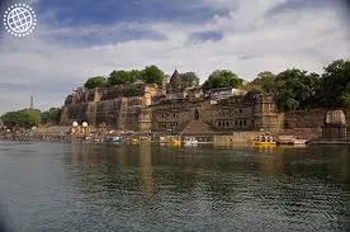
Ahilya Fort
Ahilya Fort at Maheshwar (Madhya Pradesh, India) is an experience straight out of the 18th century. Situated high above the banks of the sacred Narmada River,
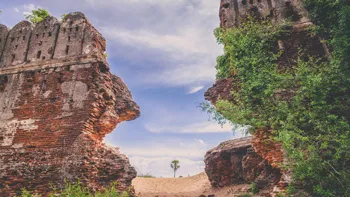
Alamparai Fort
Backwaters is very scenic- Good and safe for a swim. Local fisherman offer to take you for a ride on the boat-charges will be in the range of Rs. 200-500 for 30…
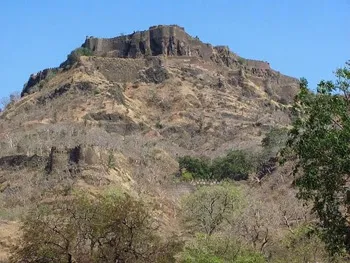
Asirgarh Fort
The Chanderi Fort is located in the small historical town of Chanderi in the Ashoknagar District of Madhya Pradesh. The Chanderi Fort is the most conspicuous…