Shoolpaneshwar Wildlife Sanctuary
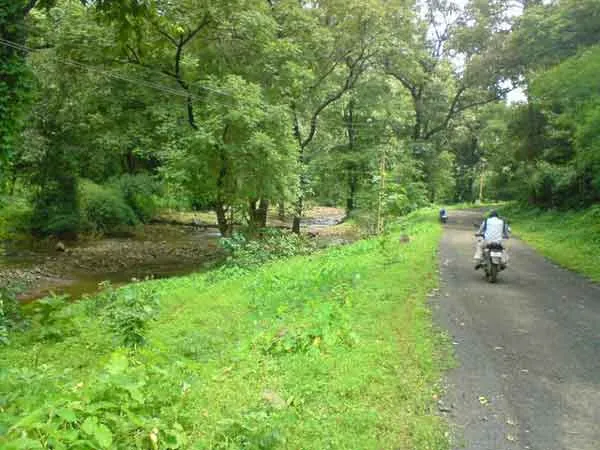
The forest area rated as one of the best and thickest in the state, is spread over an area, which includes a major watershed feeding two major reservoirs with the Rajpipla hills as backdrop. The thick vegetative ground cover not only provides endless greenery and habitat and home to a variety of life forms, but also conserves the soil and water.
Quick facts
| Nearest Petrol Pump near Shoolpaneshwar Wildlife Sanctuary | Harish Petrol Pump:O/S Panigate,Ajwa Main Road,Vadodara,ph:0265 2519911 |
|---|
About Shoolpaneshwar Wildlife Sanctuary
The sanctuary derives its name “Shoolpaneshwar” from a historic temple of Lord Shiva, which once existed in this region on the banks of river Narmada. The temple is now submerged due to the Sardar Sarovar Reservoir. However, a new Shoolpaneshwar temple has since been built near Rajpipla. The word “Shoolpaneshwar” refers to Lord Shiva portrayed as having “Shool” or “Trishul” in his hand i.e. `Pani’.
The forests are some of the best and the densest in the State and are known for richness of biodiversity. The sightings of various bird species, which have more affinities with Himalayan and Western Ghat, have unfolded a hitherto unknown, but interesting aspect of the area. Moist deciduous forests have very high scenic and aesthetic values. The flora of the ecosystem represents remnants of semi-evergreen to moist deciduous forest. Much of the vegetation is modified due to influence of the biotic pressure and forestry operations.
Moist teak forest, moist mixed deciduous forest, dry deciduous scrub, dry bamboo brakes and dry tropical riverine forest, constitute varied habitats in the Sanctuary. These forest types merge into each other imperceptibly. Teak is the principal species. Patches of pure bamboo dominate the western and north-western parts. A study documented 575 species of flowering plants in the Sanctuary.
Interesting things to Visit
Narmada River:
Whatever we tell you, however detailed a description we give, it won’t do justice to the body of water that flows from the Amarkantak plateau to Arabian sea, the river we call Narmada. Hinduism sees it as one of the seven most sacred rivers in India, and in fact, most wisdom traditions around the world draw inspiration from rivers and their behavior.Come stand on the banks of the Narmada, and whatever your faith, you might momentarily be inspired to carry out the Narmada parikrama, a two to three year process of travelling by foot up one entire bank of the river and down the other. For the time being, see how far this spell carries you; put one foot in front of the other and see how far they take you; take in the colorful riverside, the temples, ashrams, bathing sites and warm-hearted people; listen deeply for the river’s voice as it tumbles home to the sea, washing humanity clean of its borders, divisions and short-sightedness.
Nehru Foundation Stone Sthal:
The original foundation stone laid by Pandit Nehru offers a beautiful view of the river Narmada. The entire area has been specially planned for tourisms. A visit to this place after the rains is the best time to see the spectacular sight of water flowing down in full flow. Accommodation is also available nearby.
Sardar Sarovar Dam:
Largest cable crane in the world is used for placement of concrete at the Sardar Sarovar dam. Mass concrete is placed in the dam at a temperature not exceeding 12.7oC (55o F). The aggregates are, therefore, required to be chilled to about 8oC in inundations bins. Moreover, chilled water of 4oC and ice will have to be used as mixing water. It is calculated that for producing concrete of 7000 m3/ day, 300 t of ice flakes of 1.5 mm thickness at 5oC is required. An ice plant having a capacity of 300 t per day is provided.The huge dimensions of the work as well as the configuration of the site on both the banks of the river, demanded use of new solution in cable crane techniques as no other transport system can achieve the task of concrete transport for such a huge and extensive job within the desired period. It was, therefore, planned to install two cable cranes for placing the concrete for dam.
Shoolpaneshwar Mahadev Temple:
This is one of the most ancient temples here and attracts a large number of tourists and devotees. This temple was earlier submerged and has been rebuilt. The Shoolpaneshwar Wild life sanctuary also draws huge crowds.The Aditeshwar Mahadev Temple is another old Shiva temple here.
Nearest Visiting places from Shoolpaneshwar Wildlife Sanctuary
Narmada:
Bifurcating Bharuch and Vadodara districts, this Narmada district came into existence during the year 1997. This place is located between the banks of the rivers Narmada and the Karjan at the southern parts of Gujarat state. The circumference of this district is 2,755 sq.km. and Rajpipla is the district headquarters. The places of tourist visit are Sardar Sarovar, the largest dam projects of South Asia, the Karjan Dam, Vijayraj Palace dates up 1912, Shoolpaneshwar sanctuary and Malsamot Waterfalls. There are important shrines and holy sites around such as Garudeshwar,Chandod, Shuklatirth and Nareshwar, and temples of Harisiddhi Mata, Hanuman and Gayatri Mata.
Pavagadh:
Champaner is just such a place. Here you can find an old palace, fort, several mosques, but also walk the ancient streets just as its inhabitants did five centuries ago. Champaner was an out-of-the-way pilgrimage site for hundreds of years, became the capital of Gujarat, and was then abandoned to be overtaken by the jungle. The city rose and fell almost as fast as the modern stock market, but left behind far more aesthetic remains. The city is remarkably well-preserved, with Hindu and Jain temples a thousand years old, mosques from the time of the Gujarat Sultanate, and the whole workings of a well-planned capital city still in evidence, from granaries and fortifications to stepwells and cemeteries. Champaner became a UNESCO World Heritage Site in 2004.
Dakor:
The city of Dakor is a mythological cauldron, and being there is like taking a drink from fabled waters.Once a sleepy village, it used to crackle with a large number of khakhra (Butea monosperma) trees and was therefore often called a ‘Khakhariu gaam’. It is said that Rishi Dank had his ashram here, so the temple and the village are named after him as Dankpur or Dakor, and the Danknath Mahadev temple stands on the banks of Gomti Lake. As you approach from faraway you see the swaying flag on the tall and beautiful shikhar of the Ranchhodrai Dakor Temple inviting pilgrims. Chaitanya Mahaprabhu and Mirabai have both come here to pay homage to its idol.
On purnima (full moon) every month this temple town awakens to thousands of visitors in colorful festivity. Inspired by the revered legend of Bodana, many devotees even today come on foot from great distances. But remember, your Dakor adventure is complete only after tasting its lip-smacking gotas accompanied by tea or dahi (yogurt).
Hidimba Van and Rishi Dank:
In the past, Kheda district was known as ‘Hidimba Van’. This is where the Mahabharata hero Bhimsen killed a demon and married Hidimba.Rishi Dank had his hermitage in the fertile lands of Dakor, then called Dankpur after the name of the rishi. It is said that Shiva, pleased by the rishi’s devotion, granted his wish and stayed in his hermitage in the form of a linga. At present the linga stands as Danknath Mahadev temple on the bank of the holy pond Gomti.
Zarwani Eco Campsite:
This campsite is situated in the Narmada District. It is 28 kms from Rajpipla towards Kevadia Colony at the Narmada Dam site. It is 7 kms from the Thawadia checkpost. It is situated inside the Shoolpaneshwar Wildlife Sanctuary which is home to a gamut of flora & fauna. The wildlife attarction include leopards, wild sloth bears, hyena, various species of Deers and wild dogs. One can also see the rhesus monkey and the barking deer or muntjac which are rarely found in other parts of the country.One can arrange for day picnics or treks with the help of the forest department, with the forest, waterfalls and other natural beauty within easy reach. Other sightseeing areas nearby include the Zarwani waterfalls, the Shoolpaneshwar Temple, the Gheer Khadi.
Sayaji Bagh:
One of the major tourist attractions in Vadodara is the Sayaji Bagh in Vadodara, the large green park whose main entrance is on the Tilak Road. The Sayaji Bagh contains a planetarium that offers a 35 minutes show daily, except on Thursday.This garden also known as the garden of Sayaji, is an extensive park sprawling over more than a hundred acres with a mini rail track around the periphery. Cheerful kids can be seen enjoying a joy ride on the toy train. Elders may also join the fun after a little coaxing of the guard.Baroda Sayaji Bagh is situated on river Vishwamitri and was built by Sayajirao III in 1879. Inside the Sayaji Bagh, Vadodara is the Baroda Museum and Art Gallery. It was set up by the Gaekwads in the 1890’s and situated within the Sayaji Bagh. The displayed works are on innumerable number of subjects; geology, natural history, and archeology. The Art Gallery would give you a glimpse of the Mughal miniatures and manuscripts on palm leaves by the Buddhist and Jain preachers. Sayaji Bagh in Vadodara also has a planetarium named after the Indian freedom fighter Sardar Patel.
EME Temple:
Vadodara was once the capital of the Gaekwads and they named the city Baroda, which is also used at times. Vadodara is the prime industrial city of Gujarat and at the same time a growing place of tourist interest for the tourists from the various places of India and also abroad. There are several palaces, museums and parks that are reminiscent of the rich culture and heritage of the city. Besides all these things Vadodara is also celebrated for its religious attractions and the most notable among the holy places in Vadodara is the EME Temple in Vadodara.This temple is also known as the Dakshinamurthy Temple and it is a lovely shrine.The history of this temple takes us into the mythological times. The EME Temple in Vadodara is dedicated to the Lord Dakshinamurthy who is one of the reincarnations of Lord Shiva.
Maharaja Fateh Singh Museum:
Also known as Baroda, Vadodara is the highly populated town in Gujarat. This beautiful town comes after Ahmedabad and Surat as per population density is concerned. It has a population of more than 1 million. It is situated on the Vishwamitri River to the southeast of Ahmedabad. It is famously touted as the Cultural Capital of Gujarat. It is a home to the gorgeous Maharaja Palace and the Maharaja Sayajirao University of Baroda. Today tourists in huge number flock to this city to relish the beauty and charm of the impressive tourist attractions in Vadodara. There are different kinds of the tourist attractions in the city of which museums in Vadodara are the hot favorite destinations. You must give visit to Maharaja Fateh Singh Museum in Vadodara.Vadodara Maharaja Fateh Singh Museum is a right place for the art lovers. Situated in the stunning city of Vadodra, the Museum displays amazing royal collection of 19th and 20th centuries which essentially comprises of European paintings of old masters like Raphael, Titian and Murillo plus modern Western and Indian miniature paintings, Greco-Roman exhibits and Chinese and Japanese art. It also shows an interesting collection of modern Indian art. It has a rich collection of Indian and Greco-Roman artifacts.
Laxmi Vilas Palace:
Laxmi Vilas Palace in Vadodara is one of the famous monuments in Vadodara that is high on tourist value. People visiting Vadodara make it a point to visit Laxmi Vilas Palace in Vadodara. A wonderful exemplification of the Indo-Sarcenic architectural style, the palace is a majestic structure that warrants a special visit if you wish to marvel at the detailed and exquisite work from the close quarters. Indianholiday.com is your indispensable e-travelogue that provides you with all you needed to know on Vadodara’s Laxmi Vilas Palace.Vadodara’s Laxmi Vilas Palace was constructed during the period from 1878 to 1890. The construction of this palace was commissioned by Maharaja Sayaji Rao III. The total cost of its construction amounted to a whooping sixty lakh.
Museum and Art Gallery:
Vadodara which is also called Baroda is renowned as the garden city of Gujarat. This beautiful city has derived its name from the abundance of banyan trees. In yester years, it had once served as the capital of the royal Gaekwad Family. Today, this stunning city takes pride in its attractive palaces, parks, temples, and museums which are counted among the most sought after tourist attractions in Vadodara. However of all the different types of attractions the ones that play significant role in drawing tourist attention to the fullest extent are museums in Vadodara. The best of all the museums is Baroda Museum and Art Gallery in Vadodara.Vadodara Baroda Museum and Art Gallery exhibits a rich collection of artifacts. This collection comprises of Indian sculptures, ancient manuscripts and Egyptian antiquities. In the art gallery of this museum Mughal miniatures and works of great European masters are put on display.
Hotels/Lodge/Accommodation nearby Shoolpaneshwar Wildlife Sanctuary
**Revival Hotel:**Sayaji Gardens Near Kalaghoda, Sayaji gunj, Vadodara, Gujarat,India,ph:0265 2793535
**Hotel Yuvraj:**Near Central Stbus Depot,Sayajigunj,Vadodara,Gujarat,ph:0265 2794439
**Hotel Surya Palace:**Sayajigunj,Vadodara, Gujarat,India,ph:0265 2363388
Location info
-
**Address:**Shoolpaneshwar Wildlife Sanctuary Narmada,Vadodra,India
-
District: Vadodra
-
Nearest City: Bharuch
-
Best time to visit: Round the year
Climate & weather
Summers 23°- 44°C. Winters 10°-36°C
History of Shoolpaneshwar Wildlife Sanctuary
Once a small riverside village where the Narmada river emptied into the sea, Bharuch offered its sheltered waters to the shipping world and prospered as a center of international trade. The city has a rich mythological and archaeological history.
How to reach Shoolpaneshwar Wildlife Sanctuary
-
**Nearest Railway Station:**Bharuch Junction Railway Station
-
**Nearest Airport:**Vadodara Airport
**Road Transport:**Narmada is one of the 25 administrative districts of Gujarat with its head quarters located at Rajpipla. The district occupies an area of 2,749 square kilometers with a . It is one of the backward districts in Gujarat.
Nearest petrol pump
**Harish Petrol Pump:**O/S Panigate,Ajwa Main Road,Vadodara,ph:0265 2519911
Helpline & emergency contacts
-
**Police Station:**100
-
**Nearest Hospital:**Baroda Hospital:Anant Apartment,Beside Aradhana Cinema,Tilak Road,Vadodara,,Gujarat,India,ph:0265 2415405
-
Society/Community Phone Number:
-
**Link:**www.gujaratguideonline.com
Best time to visit Shoolpaneshwar Wildlife Sanctuary
October to March for comfortable weather and wildlife sightings.
Timings & opening hours
6:00 AM to 6:00 PM daily. Closed during monsoon season (July-September).
Entry fee & tickets
INR 20-50 for Indians. Safari vehicle charges extra.
Duration needed
Half day to full day.
Safety tips
Follow park rules. Do not exit the vehicle in restricted areas. Carry insect repellent. Stay quiet during safaris.
Things to carry
Binoculars, camera, water bottle, hat, insect repellent, light snacks.
Nearest airport, railway & bus
Nearest airport and railway station in the nearest city.
Mobile network coverage
Airtel, Jio, and Vi all provide good coverage across Gujarat’s major cities and tourist areas. 4G is generally reliable in Ahmedabad, Vadodara, Surat, and along major highways. Coverage may be weaker in remote areas of Kutch and interior Saurashtra. Most hotels and cafes in tourist areas offer free Wi-Fi.
Food & restaurants nearby
Food options are available in the nearest town. Traditional Gujarati thali restaurants and local eateries offer a range of vegetarian dishes.
Things to do at Shoolpaneshwar Wildlife Sanctuary
Take a nature walk or jeep safari, spot wildlife and birds, and enjoy the natural surroundings.
Frequently asked questions
What is the best time to visit Shoolpaneshwar Wildlife Sanctuary? October to March.
What wildlife can be seen? Native species including deer, leopards, birds, and reptiles.
Is prior booking needed? Recommended.
Accessibility
Accessibility information is not currently available for this site. Contact the venue directly or check with your accommodation for the latest accessibility details.
Rules & restrictions
Standard visitor rules apply. Check locally for any specific restrictions at this site.
Best photography spots
The best photography spots are typically during the golden hours (early morning and late afternoon). Scout the location first to identify the best angles, and consider the direction of light at different times of day.
Visitor information
Planning your visit to Shoolpaneshwar Wildlife Sanctuary
- Language: Gujarati is the local language; Hindi and English are widely understood at tourist sites.
- Getting around: Auto-rickshaws, taxis, and state transport buses are readily available. Hiring a private vehicle is recommended for comfort.
- What to wear: Light cotton clothing in summer; light woolens in winter. Comfortable walking shoes are essential. Modest dress is advised at religious sites.
- Photography: Check for photography restrictions before entering. Some temples and museums may charge a separate camera fee.
- Best time to visit: October to March when the weather is pleasant for sightseeing.
- Local cuisine: Don’t miss Gujarati thali — a wholesome meal with dal, rice, vegetables, roti, and sweets like dhokla, khandvi, and mohanthal.
Nearby facilities
- ATMs: Available in nearby towns and at major tourist sites.
- Medical facilities: Primary health centers and hospitals can be found in district headquarters.
- Restrooms: Public restrooms are available at major tourist spots; carry hand sanitizer and tissues.
Make your visit to Shoolpaneshwar Wildlife Sanctuary comfortable and hassle-free with these practical visitor tips for Gujarat.
Map & location view
Shoolpaneshwar Wildlife Sanctuary is located in the vibrant state of Gujarat, India. The destination is accessible by road and is well-connected to major cities and towns in the region, making it a convenient addition to any Gujarat travel itinerary.
How to reach
- By Air: The nearest airport is connected to major Indian cities including Mumbai, Delhi, Ahmedabad, and Vadodara with regular domestic flights.
- By Rail: The nearest railway station is connected to the Indian railway network with regular trains from major cities across India.
- By Road: State transport buses, private taxis, and self-drive options are available from nearby cities. Gujarat has a well-maintained network of state highways and national highways.
Use GPS navigation or local maps to find the exact location of this destination in Gujarat. The Gujarat Tourism website provides additional travel resources for visitors.
Photo gallery of Shoolpaneshwar Wildlife Sanctuary
Video gallery
Related destinations
Balaram Ambaji Wildlife Sanctuary
Balaram-Ambaji Wildlife Sanctuary is located in Banaskantha District of Gujarat, along Gujarat-Rajasthan border.Ambaji Bhadra Purnima is celebrated in Gujarat with…
Barda Wildlife Sanctuary
The area supports about 750 'maldhari' families (4000 people) in 68 'nesses'. The agriculture fields and wasteland, where acute water scarcity is experienced during…
Hingolgadh Nature Education Sanctuary
The landscape presents a magnificent mosaic of grasslands and scrub forests. The sanctuary gets full of life during rainy season with beautiful shades of green…