Tapi river-Surat
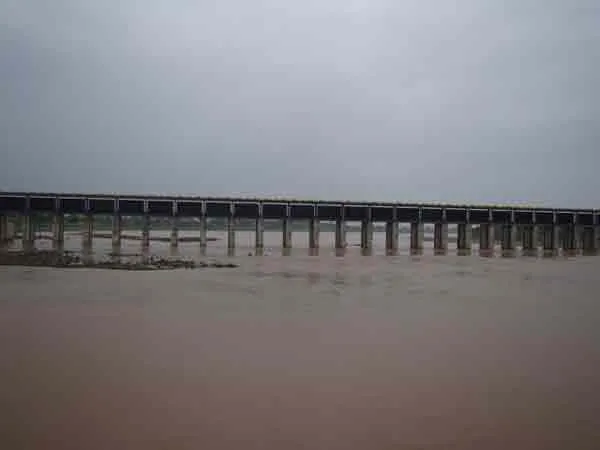
Tapti is a river of western India and the history of this river starts with its origin in the Betul district. It rises in Betul district of Madhya Pradesh and flows between two spurs of the Satpura Hills, across the plateau of Khandesh, and thence through the plain of Surat to the sea. It has a total length of around 724 km. and drains an area of 30,000 sq. m. For the last 32 m. of its course, it is a tidal flow, but is only navigable by vessels of small tonnage; and the port of Swally at its…
Quick facts
| Nearest Petrol Pump | Vimalnath Lubricants:9, Chandrak Soc.Shopping Centre,Rander Rd,Surat,Gujarat,India,ph:09426775982 Mahavir Petrol Pump:Rander Road, SuratGujarat,India,ph:0261 2787208 |
|---|
About Tapi river-Surat
Tapti is a river of western India and the history of this river starts with its origin in the Betul district. It rises in Betul district of Madhya Pradesh and flows between two spurs of the Satpura Hills, across the plateau of Khandesh, and thence through the plain of Surat to the sea. It has a total length of around 724 km. and drains an area of 30,000 sq. m. For the last 32 m. of its course, it is a tidal flow, but is only navigable by vessels of small tonnage; and the port of Swally at its mouth. The history of this river is closely associated with the Anglo Portuguese history. The upper reaches of the river are now deserted, owing to silting at the outflow of the river. The waters of the Tapti are usually not used for irrigation.
Tapi river is one of the major rivers in India. The total length of the Tapi river is approximately around 724 km. It flows in the central part of India. The river originates from the Betul district of Madhya Pradesh in the Satpura range at an elevation of 752 meter above the sea level. The states through which the Tapi river flows include Maharashtra, Gujrat and Madhya Pradesh. Apart from the Narmada river, Tapi is the only river which flows in the westward direction and merges into the Arabian Sea. The Tapi basin extends to the total area of 65, 145 sq km, which is approximately 2.0% of the total geographical area of India. The main tributaries of the Tapi river are Purna, The Girna, The Panjhra, The Vaghur, the Bori and the Aner.
The river originates in the eastern Satpura Range of southern part of Madhya Pradesh. It then flows westwards running in Madhya Pradesh`s Nimar region, Maharashtra`s Kandesh and east Vidarbha regions in the northwest corner of the Deccan Plateau and South Gujarat. It empties into the Gulf of Cambay of the Arabian Sea, in the State of Gujarat. The important tributaries of the Tapti River are Purna River, Girna River, Panzara River, Waghur River, Bori River and Aner River.The river basin covers an area of 65,145 square kilometers. The basin comes under the state of Maharashtra covering an area of 51, 504 square kilometers, Madhya Pradesh over an area of 9,804 square kilometers and Gujarat spread over an area of 3,837 square kilometers. The districts drained by river in Maharastra are Amravati, Akola, Buldhana, Washim, Jalgaon, Dhule, Nandurbar, and Nashik districts, Betul and Burhanpur districts of Madhya Pradesh and Surat district of Gujarat.
The historical importance of Tapti river dates back to the earlier times when Tapti river at Surat was used as the major ports for the purpose of exports of goods and also as an important halt destination for Muslim pilgrimage called Haj to Mecca. The river is also called by the names of Tapati, Tapee, Tapti and Taapi. Tapi river is been supporting the large number of population especially the aboriginal people such as Dhodia, and Bhils who are greatly dependent on it. The soil around the Tapi River is best for agriculture. The rural and tribal population around the Tapi River helps to harvest a large number of chief crops around it and sell it in the market to earn their livelihood. The water of the Tapi River is heavily used for the irrigation reasons. Tapi River is the home to the natural habitats of many wild animals including tigers, lions, snakes sloth bear and many more.
History
The history of Tapti River is deeply associated with the history of the places across which it flows. Tapti is a river of western India and the history of this river starts with its origin in the Betul district. It rises in Betul district of Madhya Pradesh and flows between two spurs of the Satpura Hills, across the plateau of Khandesh, and thence through the plain of Surat to the sea. It has a total length of around 724 km. and drains an area of 30,000 sq. m. For the last 32 m. of its course, it is a tidal flow, but is only navigable by vessels of small tonnage; and the port of Swally at its mouth. The history of this river is closely associated with the Anglo Portuguese history. The upper reaches of the river are now deserted, owing to silting at the outflow of the river. The waters of the Tapti are usually not used for irrigation.
Interesting things to Visit
Religious importance:
The religious importance of Tapti River is thought to be equivalent to that of legendary Ganges. According to the legends, Tapti River is the daughter of Surya or the Sun God. Some says that Surya has given birth to the Tapti River in order to save himself from his own intense heat. The river is also widely mentioned in the great Indian epic Mahabharata.The naming of the Tapti River is closely linked with its birthplace, Multapi in Madhya Pradesh. The Tapti River took birth in the Betul district from a place called Multai. The Sanskrit name of Multai is Multapi, meaning origin of Tapi Mata or the Tapti River.
Nearest Visiting places
Sanjan:
Surat, located on the western part of India within the Gujarat state is often touted as the Silk City and the Diamond City. The burgeoning textile and diamond businesses attract many a corporate guests, but the city has also not failed to captivate the imagination of the leisure tourists as well. There are a number of monuments in Surat that play a key role in boosting the value of the place in terms of tourism. If you are planning to take a trip to Surat, then a visit to Surat’s Sanjan is highly recommended.Sanjan was one of the primary Parsi settlements in India. A number of excavations carried out in Surat’s Sanjan have thrown a new light on the momentous episode of the flight of the Zoroastrians from Iran, about 1,400 years ago. According to the popular belief Surat’s Sanjan was founded by the Zoroastrians who took shelter here after they were compelled to flee Iran. The progeny of those Zoroastrians are, at present, known as the Parsis.
Old Fort:
The city of Surat is located on the bank of river Tapi in the West Indian state of Gujarat. Surat was a grand port city during the Mughal period. Since the ancient times, the early port of Surat has been well-known for its elite quality fine silks and beautiful brocades and its trade in various spices. Surat has been one of the most progressive of India’s cities in the 17th and 18th centuries. Presently, Surat is a chief industrial city with many textile mills. Besides, Surat is also an imperative diamond-cutting centre in India. Surat features many attractive tourist destinations. Monuments in Surat are a popular destination with tourists visiting the famous Old Fort which stands tall in the city.
Udvada:
Udvada, near Surat is celebrated for being a very sacred place among the Parsis and is a small sleepy village which is located in the southern coast of Gujarat. It is as important to the Parsis as is Haridwar for the Hindus, Mecca for the Muslims and Vatican City for the Christians. A large number of Parsis flock here every year, both from within the country and from abroad. It was here that the victorious fire or Atash Behram was brought from Persia by the Parsis in the 18th century. This fire is placed in a temple which is strictly meant for the Parsis. As a result, the non-Parsis are not allowed to enter here. This place can be visited from outside. Peace and bliss pervades here that simply enthralls the visitors who come from far and wide.
Sardar Patel Museum:
The Sardar Patel Museum in Surat is a multipurpose museum which is located in Sonifalia. It plays host to several pieces of antiques such as that made of wood, metal, ivory, stone, sandalwood, porcelain and terracotta. Several old oil paintings, miniatures, textiles, manuscripts and many such other items are also displayed in the exhibition organized by this museum. This is the only museum in Surat that has gained a lot importance owing to its rich collection of ancient historical items that are important part of the national heritage too. One will come across 10, 000 specimen of the various arts and crafts at this place. There is also an open air theater which can accommodate about 4000 people at a time.A visit to this museum will bring forth the dormant history of Surat. A mere glimpse of the specimens displayed here would cast an amazing spell, not only on the archaeologists who come to pay a visit, but also on the common tourists.
Dutch Garden:
The Dutch garden in Surat is essentially cemeteries of the officers who landed and settled in Gujarat on their business ventures. Dutch garden is one of the most significant gardens in Surat. Gardens in Surat have been expanding from time to time, under succeeding gardeners to its present state. The striking features of the English and Dutch cemeteries are their huge and imposing tombs. They tell the story of power and glory. Tombs of Christopher Oxenden and George Oxenden, two English traders who took charge of the English Factory in Surat, are the biggest ones in the English cemetery. The tomb of Baron Adrian Van Reede, who was director of the Dutch Company in India, stands out arrestingly in the Dutch cemetery.
Hotels/Lodge/Accommodation
**Budget Inn Bellevue:**Near railway station,sumul dairy road,surat,Gujarat,ph:0261 2532121
**Hotel Lords ParK:**Delhi Gate,Ring Road,Surat,Gujarat,India,ph:022 66181940
Location info
-
**Address:**Tapi river,Surat,Gujarat,India
-
District: Surat
-
Nearest City: Surat
-
Best time to visit: October to April.
Climate & weather
The summer in these parts are quiet warm with average temperature being around 43 ’C to avoid any kind of sickness proper care of health should be taken during the summer months in Surat. Winter is quiet pleasant with temperature dipping to around 9 ’C
How to reach Tapi river-Surat
-
**Nearest Railway Station:**Surat Railway station is situated in the eastern-central part of the city.
-
**Nearest Airport:**Surat Airport is situated on the outskirts of the city
**Road Transport:**There are a number of buses operating from Surat. Theses buses connect the city to various important states like Maharashtra, Madhya Pradesh, Delhi and Rajasthan. Apart from this, there are state buses as well as private buses connecting Surat to various cities in Gujarat. The city is connected to the National Highway via a connector highway. It is also accessible from National Highway 6, via Hazira.
Nearest petrol pump
**Vimalnath Lubricants:**9, Chandrak Soc.Shopping Centre,Rander Rd,Surat,Gujarat,India,ph:09426775982
**Mahavir Petrol Pump:**Rander Road, SuratGujarat,India,ph:0261 2787208
Helpline & emergency contacts
- **Police Station:**100
Nearest Hospital:
Gabani Ashvin Devjibhai Gabani Kidney Hospital:1st Floor Near Aurved College,railway Station,Surat,Gujarat,India,ph:0261 2531174
Healing Hand Hospital:Prasham Building,City Light Road,Surat,ph:0261 2223227
-
Society/Community Phone Number:
-
**Link:**www.mapsofindia.com
Best time to visit Tapi river-Surat
October to March.
Timings & opening hours
Always accessible.
Entry fee & tickets
No entry fee.
Duration needed
1 hour.
Safety tips
Do not swim in deep or unknown areas. Be careful near riverbanks during monsoon.
Things to carry
Camera, water bottle.
Nearest airport, railway & bus
Nearest airport and railway station.
Mobile network coverage
Airtel, Jio, and Vi all provide good coverage across Gujarat’s major cities and tourist areas. 4G is generally reliable in Ahmedabad, Vadodara, Surat, and along major highways. Coverage may be weaker in remote areas of Kutch and interior Saurashtra. Most hotels and cafes in tourist areas offer free Wi-Fi.
Food & restaurants nearby
Food options are available in the nearest town. Traditional Gujarati thali restaurants and local eateries offer a range of vegetarian dishes.
Things to do at Tapi river-Surat
Visit the riverfront, explore ghats, and enjoy the scenic views.
Frequently asked questions
Where does Tapi river-Surat flow? In Gujarat.
What is the best time to visit? October to March.
Is it safe for bathing? At designated ghats only.
Map & location view
Tapi river-Surat is located in the vibrant state of Gujarat, India. The destination is accessible by road and is well-connected to major cities and towns in the region, making it a convenient addition to any Gujarat travel itinerary.
How to reach
- By Air: The nearest airport is connected to major Indian cities including Mumbai, Delhi, Ahmedabad, and Vadodara with regular domestic flights.
- By Rail: The nearest railway station is connected to the Indian railway network with regular trains from major cities across India.
- By Road: State transport buses, private taxis, and self-drive options are available from nearby cities. Gujarat has a well-maintained network of state highways and national highways.
Use GPS navigation or local maps to find the exact location of this destination in Gujarat. The Gujarat Tourism website provides additional travel resources for visitors.
Photo gallery of Tapi river-Surat
Video gallery
Related destinations

Bhadar Rivers and the list of Popular Rivers in Gujarat | HolidayLandmark
Bhadar Rivers and the list of Popular Rivers in Gujarat | HolidayLandmark is one of the notable places to visit in Gujarat.
Gomti River and Famous Gomti sangam ghat in Gujarat | HolidayLandmark
Gomti River and Famous Gomti sangam ghat in Gujarat | HolidayLandmark is one of the notable places to visit in Gujarat.
Narmada River
Narmada is a Sanskrit word meaning 'the Giver of Pleasure. It forms the traditional boundary between North India and South India and flows westwards over before…