Church of St. Cajetan
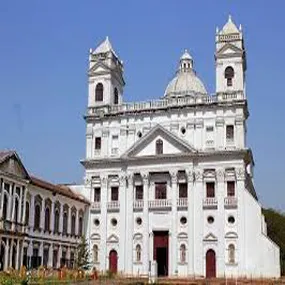
This is one of the popular church amongst the Goans, this church is built in the laterite blocks and Corinthian design. The Church of St. Cajetan look like the St. Peter’s Church in Rome. The structure is well-maintained, huge tourist attention to this masterpiece.
Quick facts
| Address | : |
|---|
About Church of St. Cajetan
About Church of St. Cajetan
Visiting Time:
Visit the church on all days of the week 9.00 AM to 12.00 PM in the morning and 4.00 PM to 7.00 PM in the evening.
Interesting Things to See and Find in Church of St. Cajetan:
You can see the laterite blocks and Corinthian design.
Best time to visit Church of St. Cajetan
November to February offers dry, pleasant weather. Best time of day: morning (9:00–11:00 AM) or late afternoon (4:00–6:00 PM). Avoid midday heat and the monsoon (June–September).
Timings & opening hours
Open daily. Most sources report split hours: 9:00 AM to 12:00 PM and 4:00 PM to 7:00 PM. Plan for a morning or late-afternoon visit.
Entry fee & tickets
Free. No entry fee for any visitor. Photography (including video) is also free.
Duration needed
30 minutes to 1 hour.
Location info
Old Goa, near Se Cathedral and Viceroy’s Arch, about 10 km from Panaji.
Safety tips
Standard precautions — watch your step on uneven stone floors. Dress modestly (shoulders and knees covered). Remove shoes before entering the church.
Things to carry
Modest clothing (a scarf or shawl to cover shoulders if needed), camera (no flash inside), and a water bottle.
Nearby visiting places
Se Cathedral (about 200 m), Basilica of Bom Jesus (about 500 m), Church of St. Francis of Assisi (about 400 m), Viceroy’s Arch (about 100 m), Archaeological Museum (about 400 m), and St. Augustine’s Ruins (about 800 m).
Nearest airport, railway & bus
Old Goa bus stop is within walking distance. Karmali Railway Station is about 4 km away. Panaji is about 10 km.
Mobile network coverage
Airtel, Jio, and Vi all provide coverage across Goa. In beach areas and towns, 4G is generally reliable. Coverage may be weaker in remote interior locations or along certain coastal stretches. Most hotels and cafes in tourist areas offer free Wi-Fi.
Food & restaurants nearby
Old Goa has a few small eateries and snack stalls near the church complex. For a proper meal, Panaji (about 10 km away) offers a wide range of restaurants, from Goan cuisine to multi-cuisine dining.
Hotels & accommodation nearby
Panaji (about 10 km from Old Goa) has the widest range of accommodation, from heritage guesthouses in Fontainhas to modern hotels. Beach areas (Calangute, Candolim) are about 20–25 km away.
History of Church of St. Cajetan
Built between 1655 and 1661 by Italian friars of the Order of Theatines, sent by Pope Urban VIII to preach in the Kingdom of Golconda. Denied entry to Golconda, they settled in Old Goa in 1640. King Dom João IV granted permission to build in 1650, and construction of the church began in 1655. Its original name is the Church of Our Lady of Divine Providence, but it is popularly named after St. Cajetan, founder of the Theatine order and a contemporary of St. Francis Xavier. It is part of the UNESCO World Heritage Site “Churches and Convents of Goa.”
Things to do at Church of St. Cajetan
Admire Goa’s only surviving domed church — modelled on St. Peter’s Basilica in Rome, featuring a massive hemispherical dome and a Greek cross plan. Examine the Corinthian columns, seven gilded altars, and the Latin inscription around the dome (Matthew 6:33). Photograph the white facade with its distinctive twin quadrangular belfry towers. See the 22-metre deep well beneath the dome. Visit the crypt beneath the main altar.
Things to visit & highlights
The unique hemispherical dome — the only surviving dome in Goa. The seven altars with intricate gilded work. The 22-metre deep well engineered beneath the dome. The Latin inscription around the cupola. The crypt beneath the main altar. Hindu carvings on an ancient arch from the Palace of Adil Shah within the compound.
Climate & weather
Goa has a tropical monsoon climate with three distinct seasons. Winter (November–February) is the peak tourist season: temperatures range from 20°C to 32°C with low humidity, clear skies, and calm seas — ideal for all outdoor activities. Summer (March–May) is hot and humid with temperatures reaching 35°C; beaches are less crowded but midday heat can be intense. The monsoon (June–September) brings heavy rainfall, rough seas, and high humidity; many beach shacks close, but the landscape is lush and green, and it is the quietest time for those seeking solitude.
Helpline & emergency contacts
Tourist Helpline: 1364. Police (Old Goa): +91-832-2285116. Ambulance: 108.
Nearest petrol pump
Petrol pumps are located on the Panaji–Old Goa road, about 3–5 km from the church complex.
Frequently asked questions
Is St. Cajetan’s Church a replica of St. Peter’s Basilica? It is modelled on St. Peter’s Basilica in Rome — it features a similar hemispherical dome and Greek cross plan, though on a much smaller scale.
What is the dome inscription in St. Cajetan’s? A verse from Matthew 6:33 in Latin: “Quaerite primum regnum Dei et haec omnia adjicientur vobis” — “Seek ye first the Kingdom of God, and all these things shall be added unto you.”
Is photography allowed inside St. Cajetan’s? Yes — photography is free, but flash and tripods are discouraged, especially during services.
Accessibility
Most churches in Goa have steps at the entrance and may not have ramps. The interiors are generally level once inside. Some historic churches listed as UNESCO sites have uneven stone floors. Visitors with mobility concerns should check in advance. Most churches welcome assistance animals.
Rules & restrictions
Modest dress is required: shoulders and knees must be covered (scarves or shawls are often available at the entrance). Photography is generally permitted without flash, but video may be restricted. Maintain silence inside. Mobile phones should be on silent mode. Remove shoes if required (indicated by signage). Do not touch artefacts or altars. These are active places of worship — respect services, festivals, and devotees.
Best photography spots
The white Baroque facades photograph best in the early morning or late afternoon when the light is soft and the sun is at an angle. Interiors are often dimly lit — a fast lens or higher ISO helps. Altars and stained-glass windows are the key subjects. Many churches illuminate their facades at night — evening shots of lit-up white churches against dark skies are stunning. Use a wide-angle lens for interiors, and always check the photography policy (flash is usually prohibited).
Visitor information
Please check locally for current visitor information.
How to reach Church of St. Cajetan
How to reach Church of St. Cajetan from the Goa International Airport? From Goa International Airport (GOI) to Church of St. Cajetan distance is 26.1 km via NH366 and MDR 1. Prepaid taxi offers an excellent competitively priced service outside of the airport. Local buses are available. How to reach Church of Church of St. Cajetan from the Vasco-Da-Gama railway station, Madgaon railway station and Thivim Railway Station? The distance between Church of Church of St. Cajetan from Vasco-Da-Gama railway station 27.2 km via NH366 and MDR 1, Madgaon railway station 35.5 km via NH 66 and MDR 1 and Thivim Railway Station 31.6 km via NH 66 and NH748. All transport mode are available outside the railway station like Cab, Local bus and pre-paid taxi.
Map & location view
This section is being updated and will be available shortly.
Photo gallery of Church of St. Cajetan
Video gallery
Related destinations
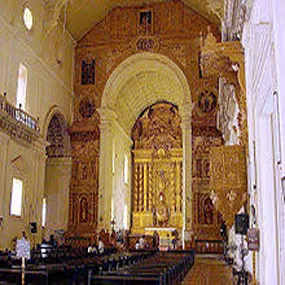
Bom Jesus Basilica Church
Bom Jesus Basilica church is one of the famous UNESCO Heritage Site in Goa and it is dedicated to newborn Jesus and is now known as a World Heritage Monument…
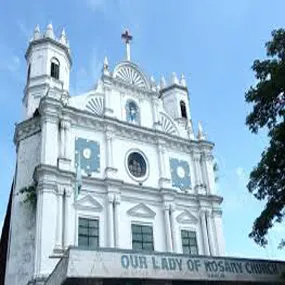
Church of Lady of Rosary
Church of Lady of Rosary is famous for a World Heritage Site and this is one of the popular church amongst the Goans. It is located to the west of the famous…
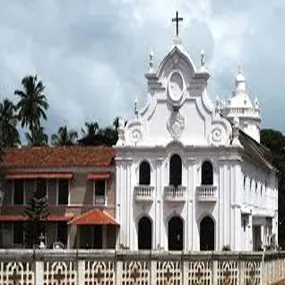
Church of Our Lady of Miracles
Church of Our Lady of Miracles depicts the rich cultural heritage of Goa. This graceful church built by the Portuguese in 1594. It is believed that church built on…