Thullal Dance
Thullal Dance is one of the popular dances of Kerala. There are a number of arts and crafts practiced in Kerala, including dance, martial arts, and ritual arts. The dance forms of Kerala bear the legacy of the traditional art and craft of Kerala.One of the classical performing arts of Kerala, Thullal dance of Kerala is worth a watch on your tour to Kerala. The word 'Thullal' means 'Caper' or 'to leap or jump about playfully'. This art form emerged in the eighteenth century. A solo performance…
About Thullal Dance
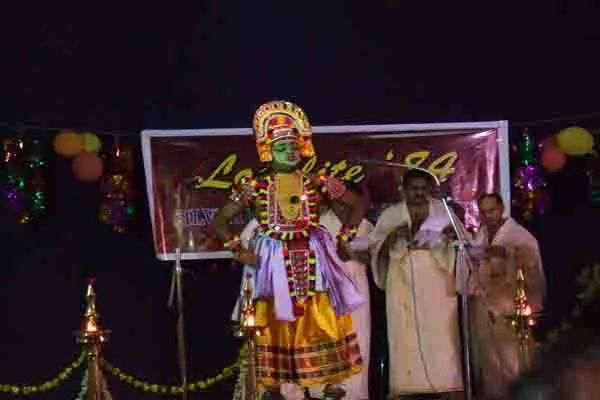
Thullal Dance is one of the popular dances of Kerala. There are a number of arts and crafts practiced in Kerala, including dance, martial arts, and ritual arts. The dance forms of Kerala bear the legacy of the traditional art and craft of Kerala.One of the classical performing arts of Kerala, Thullal dance of Kerala is worth a watch on your tour to Kerala. The word ‘Thullal’ means ‘Caper’ or ‘to leap or jump about playfully’. This art form emerged in the eighteenth century. A solo performance combining both dance and recitation, thullal is the explication of a tale - normally drawn from the puranas, narrated in verse. Kunchan Nambiar, renowned poet of the eighteenth century, first introduced this art form. A solo performance, thullal is a tale narrated in verse. The thullal performer sings and he is supported by another singer who repeats the verses and is accompanied by an orchestra of mridangam, harmonium and cymbals. The performer through the classical acting techniques, portrays the various characters in an episode and does the narration.The themes are based on mythology. This satiric art form was introduced in the18th century by the renowned poet Kunchan Nambiar. Humour, satire and social criticism are the hallmarks of Thullal.The language is straightforward Malayalam, the simple diction of the common man. Various classical dace forms and folk have been combined to create an experience enjoyable to the masses. The music is rich in beats and the dancer is accompanied by 2 percussionists- a cymbalist and a maddalam player. The cymbalist repeats the Thullakaran’s (dancer’s) lines for a dramatic effect.The make up, though simple, is very much akin to that of Kathakali. The dance is performed in the compound of a temple or the courtyard of a house, as no formal stage is used for the performance.
The face is painted with yellow arsenic mixed with blue. The eyes are blackened and lips reddened. The full painting of the face is retained for the expressive advantage. The dancer wears a breast-plate adorned with golden pearls, necklaces and colourful tassels. The white waist clothes resemble skirts. The head-gear is small, made of light wood, studded with bright stones and decorated with golden paper. The bracelets, amulets and waistlets are almost the same as inKathakali.Three forms of thullal - Ottan Thullal, Parayan Thullal and Seethankan Thullal, evolved in course of time. The three forms are differentiated on the basis of make-up, styles of narrative singing, rhythms of dancing and foot work. Of the three Ottan Thullal is the most popular.It is a colorful spectacle to watch women in their carefree mood. The event continues amidst jeers and laughter till the day comes to its end.The performer takes up the role of detached narrator and yet gives an impassioned performance to the same lyrics the very next instant. The dance performance is spangled with pieces of vigorous footwork.
History of Thullal Dance
Kunchan Nambiar (1705 – 1770) hailed from Killikurissi Mangalam in Palakkad district, The story Kunjan Nambiar presented was a familiar one, the Kalyaanasaugandhikam from the Mahabhaaratha, but he clothed it with his own words. The Chaakiaar momentarity defeated, was silent, but later took his revenge by persuading the ruler, the Raja of Ambalapuzha, to forbid Kunjan Nambiar from performing or visiting there again.
Location info
kerala.
Mobile network coverage
Airtel, Jio, BSNL, and Vi all provide coverage across Kerala. 4G is reliable in Kochi, Thiruvananthapuram, Kozhikode, and along the coastal belt. Coverage may be weaker in remote sections of the Western Ghats, deep forest reserves, and certain backwater stretches. Most hotels, houseboats, and cafes in tourist areas offer free Wi-Fi.
Food & restaurants nearby
Food options are available in the nearest town. Kerala cuisine — fish curry, appam with stew, puttu, and Kerala sadhya — is widely available and famously delicious.
Hotels & accommodation nearby
Accommodation is available in the nearest town or city. Options range from homestays to luxury resorts. Kerala’s homestay network is excellent and offers authentic local experiences.
Climate & weather
Kerala has a tropical monsoon climate with warm, humid conditions year-round. The best time to visit is November to February, when temperatures are a pleasant 22°C–30°C with low humidity and clear skies. March–May is hot and humid (up to 36°C). The southwest monsoon (June–September) brings heavy rainfall — the landscape transforms into lush green and this is the best time for Ayurvedic treatments. The northeast monsoon (October–November) brings shorter showers. Hill stations (Munnar, Wayanad) remain cooler year-round.
Helpline & emergency contacts
Tourist Helpline: 1364 (toll-free, 24×7). Police: 112 (all-India emergency). Ambulance: 108. Women’s Helpline: 1091. Kerala Police Tourist Helpline: +91-471-2722255.
Nearest petrol pump
Petrol pumps are available in the nearest town or on the approach road — check locally for the closest option.
Best time to visit Thullal Dance
Thullal Dance performances are held throughout the year. Kathakali performances are typically evening events (6:30 PM onwards). Theyyam performances are seasonal and linked to specific temple festivals, primarily between November and May. Cultural centres in major cities offer regular performances for tourists.
How to reach Thullal Dance
Nearest Airport: Cochin International Airport (COK) (approximately 0 km). Nearest Railway Station: Ernakulam Junction / Ernakulam Town Railway Station. The destination is well-connected by Kerala State Road Transport Corporation (KSRTC) buses and private taxis from major towns.
Timings & opening hours
Cultural performances (Kathakali, Theyyam, Mohiniyattam) typically take place in the evenings. Kathakali performances usually start at 6:30 PM–7:00 PM and last for about 2–3 hours. Theyyam performances occur at specific temple festivals and timings vary.
Entry fee & tickets
Kathakali performance tickets: INR 200–500 per person. Theyyam performances during festivals are free to watch. Dance festivals and cultural centres may charge INR 100–500 for entry. Some performances are included in temple festival events (free).
Duration needed
Kathakali performances: 2–3 hours. Theyyam performances: 30 minutes to 2 hours per performance (festivals have multiple performances throughout the day).
Safety tips
Kathakali and other dance performances are well-organised cultural events — follow venue rules. Arrive early for good seats. Photography may be restricted during performances (no flash). Some performances (like Theyyam) occur at temple grounds — follow temple customs.
Things to carry
A camera (check performance photography rules — flash is generally prohibited), a light sweater or wrap for evening performances (many venues are open-air), and comfortable seating. Some Theyyam venues are temple grounds — carry modest covering as required.
Nearby visiting places
Fort Kochi, Mattancherry Palace, Cherai Beach, Bolghatty Island, Marine Drive, Chinese Fishing Nets, Hill Palace Museum, Kerala Kathakali Centre, St. Francis Church
Nearest airport, railway & bus
Nearest Airport: Cochin International Airport (COK) (approximately 0 km). Nearest Railway Station: Ernakulam Junction / Ernakulam Town Railway Station. The destination is well-connected by Kerala State Road Transport Corporation (KSRTC) buses and private taxis from major towns.
Things to do at Thullal Dance
Watch a live Kathakali/Mohiniyattam/Theyyam performance, arrive early to see the elaborate makeup application process (for Kathakali), learn about the mudras (hand gestures) and expressions used in the dance, take photographs (where permitted), visit the green room to see performers preparing, attend a lecture-demonstration (offered by many cultural centres), and buy traditional dance-related souvenirs like Kathakali masks.
Things to visit & highlights
The elaborate costumes, makeup, and facial expressions (in Kathakali), the graceful movements and hand gestures (mudras), the live traditional music accompaniment, the storytelling aspect of the performance, and the backstage experience of watching performers prepare.
Frequently asked questions
How long is a Kathakali performance? — A full Kathakali performance lasts 2–3 hours. Most tourist-focused centres offer 1-hour condensed performances that include the highlights. Where can I watch authentic performances? — Kochi has several Kathakali centres (Kerala Kathakali Centre, Cochin Cultural Centre). Theyyam performances are best witnessed at local temple festivals. Is photography allowed? — Photography is usually allowed without flash. Video recording may require additional permission or fee. Some performances restrict photography during certain segments.
Quick facts
- Type: Destination
- State: Kerala
- Category: Dance
Map & location view
This section is being updated and will be available shortly.
Photo gallery of Thullal Dance
Video gallery
Related destinations
Chavittunatakom Dance
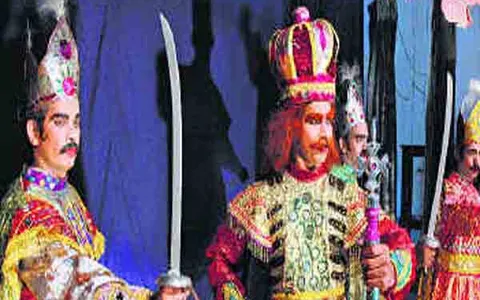
Chavittunatakom Dance in Kerala is one of the oldest dance forms in Kerala. This is one of the Christian dance forms of Kerala whose origin can be traced to the…
Duffmuttu Dance
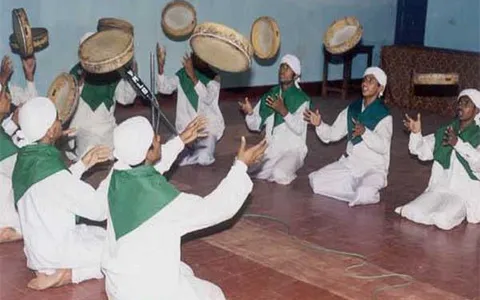
The Duff Muttu or the Dubh Muttu, or the Duff Kalli is an art form performed in Kerala by the Muslim community to commemorate their festivals, nuptial ceremonies or…
Kakkarissi Natakom Dance
http://seekerala.blogspot.com/2008/03/dances-and-folk-arts-of-kerala.html http://folks-musics.blogspot.com/2008/07/folk-dance-music-of-kerala.html…