Sabarimala Festival
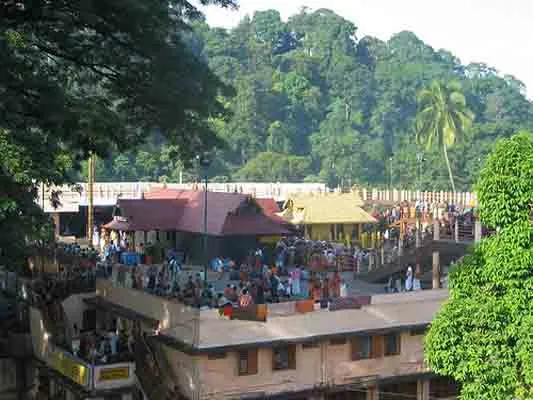
Sabarimala Temple nestled in the thick forests of the Sabari hills of the Western Ghats range at an altitude of 914 m above sea level, this hill shrine is dedicated to Lord Sree Ayyappan. The temple draws over fifty million pilgrims a year. The shrine will be teeming with devotees especially during the main pilgrim season from November to January. Mandalapooja, Makaravilakku, Arattu and Vishuvilakku are among the important occasions at the temple. The temple is open on the afore-mentioned…
About Sabarimala Festival
Sabarimala Temple nestled in the thick forests of the Sabari hills of the Western Ghats range at an altitude of 914 m above sea level, this hill shrine is dedicated to Lord Sree Ayyappan. The temple draws over fifty million pilgrims a year. The shrine will be teeming with devotees especially during the main pilgrim season from November to January. Mandalapooja, Makaravilakku, Arattu and Vishuvilakku are among the important occasions at the temple. The temple is open on the afore-mentioned occasions and on the first five days of every Malayalam month. This year, the annual ten-day festival will start on 2nd April with Kodiyettu (ritualistic flag hoisting) and would end with Arattu on 11th April. Vishuvilakku, another important occasion falls on 14th April, this year.
The Sabarimala festival is celebrated during the months of November-January. The Sabarimala temple festival of Kerala is celebrated in the honor of Lord Ayappa. Sabarimala is a renowned pilgrimage in Kerala and is famous all over the world. In Kerala, Sabarimala festival is attended by thousands of devotees who cover huge distances to reach the holy shrine. The Sabarimala temple is located atop a rugged hill in the Western Ghats.
The devotees throng the temple in thousands. They walk barefoot through forests and uneven paths to reach the temple. All devotes observe strict fast and devote themselves purely to God for 40 days before taking on the trip. They do not shave, eat selected food, stay away from vices like smoking and drinking, sleep on the floor, stay away from women and family and wear a black cloth around their waist as a symbol of going to the temple. While climbing, all devotees visiting the temple are supposed to carry an offering of coconuts, camphor, ghee and rice.
On the way to the temple, there is a river where the devotees are supposed to take a dip. It is said that people who take a dip in this river while going to Sabarimala are cleansed of all their sins. Also, devotees are supposed to pay a visit to a temple dedicated to a Muslim God, who is supposed to be a close friend of Lord Ayappa. On the day of Makara Sankranti, a glowing speck of light is spotted on the hill just opposite the temple. This glowing flame is supposed to be very auspicious and devotees break into thunderous chanting of Lord’s name on seeing this flame. Women (under the age of 50) are not allowed in the temple.
Makara Vilakku Pooja is a seven-day festival conducted annually in the famous Ayyappa Temple at Sabarimala. The festival begins on the auspicious day of Makara Sankranthi, the day on which the sun is in summer solstice (vernal equinox). This is also the first day of the Malayalese month of Makaram. Makara Vilakku Pooja commemorates the day on which idol of Lord Ayyappa or Dharma Sastha was enshrined in the temple and is the most important event to be conducted at Sabarimala. Thousands of devotees gather to participate in the celebrations of Makara Vilakku every year. Mandala Pooja festival extends to 41 days prior to Makara Sankranthi.
During the seven days celebration the jewellery of the deity is brought from Pandalam. On the day of Makara Vilakku or Makara Sakranthi lord Ayyappa is decorated with all the ancient ornaments made in gold. The enshrining of the deity is the most important event of the Sabrimala festival in Kerala. The festival then is followed by a procession of people towards hill of the Sahyadri ranges of Western Ghats to witness the celestial light that appears on this day. This light known as the Makarajyothi, on the hill is believed to be the symbol of lord Ayyapa’s blessing to his devotees.
Getting there:
Road transport is only available up to Pamba, which is about 65 kms from Pathanamthitta. From there one has to walk a distance of 4- 5 kms.
Nearest railway station: Chengannur, about 28 kms from Pathanamthitta.
Nearest airport: Thiruvananthapuram International Airport, about 117 kms from Chengannur
History
Ayyappa Temple at Sabarimala in Pathanamthitta district of Kerala is the most sacred pilgrimage centre for the people of Kerala. Presiding deity of Sabarimala shrine is Lord Ayyappa known as Dharma Sastha, a symbol of unity between Vaishnavites and Saivites. This is so because, Ayappan is said to be born of union between Lord Vishnu and Shiva when the former took the avatar of Mohini, the seductress. Shiva succumbed to the charms of Mohini and Ayappa was born out of this union. Hence Ayappa is also called ‘Hari Hara Putra’ where ‘Hari’ is Vishnu, ‘Hara’ is Shiva and ‘Putra’ means son. No wonder, Sabarimala attracts lakhs of devotees from across the country particularly, southern states of India every year.
The story behind this temple has it that when Lord Vishnu took the form of the enchantress Mohini to destroy the demon Bhasmasura, Lord Shiva was enamored by this celestial femininity. Their divine union resulted in the birth of Ayappa. The Lord Shiva entrusted the child Ayappa (also called Manikandan because of the bell tied around his throat) to the Pandya King Rajasekara. He benevolent king brought up the divine child as his eldest son, and declared him Crown Prince when he was 12 years old. The Queen however, had evil intents. Wanting her own son to be crowned, she feigned an incurable headache. The queen let Prince Manikandan know that her condition could only be cured if the prince returned with a tigress’ milk. The obedient son let home. Lord Ayappan in the course of his mission is known to have fought and slain demoness Mahishi. The Devas or celestial beings turned into tigers and tigress and accompanied the young prince to show their gratitude. The sight of a twelve year old child riding a tiger and accompanied by an ambush of tigresses shamed the royal couple who sought forgiveness. After blessing his foster parents, the lord prepared to return to his heavenly abode when the king begged him to remain in the Pandya kingdom. Lord Ayappa granted the king’s boon and agreed to reside in the temple built by the king on the Sabari hills. He also conceded to appear in the form of a star (Makara Jyothi) on the Festival of Makara Sankaranthi. It is hence believed that the ancient temple of Sabarimala, with the sacred 18 steps was built under the orders of King Rajasekara.
Interesting things to Visit
Pandalam:
This is a township in Pathanamthitta District. It is one among the fastest growing towns in Kerala, India. It is considered as a holy town. Pandalam is also a well known educational and health care centre in central Travancore.Pandalam hosts a lot of educational institutions ranging from reputed schools to Post Graduate, Training, Ayurveda, Medical and Engineering Colleges.
Pampa Maha Ganapathi Temple:
The Mahaganapathi Temple at Pampa 8 Kms from Sabarimala, has an important roll in the Sabarimala pilgrimage as it is the main halting point. The temple is reached by climbing about 102 steps. Breaking of coconuts is the main offering here. Neelimala, Appachimedu, Sabareepeedam, Saramkuthi are the other holy places enroute.
Pandalam Valiyakoyickal Temple:
Located 15 kms away from Pathanamthitta on the banks of Achankovil river, is the Valiyakoyickal Temple of Sri Dharma Sastha. Believed to be constructed by the Raja of Pandalam, this Ayyappa shrine has been modeled on the Sabarimala temple. Pilgrims usually stop here to worship before proceeding to Sabarimala. One of the major events associated with the ‘Makaravilaku’ festival is the procession carrying the ‘Thiruvabharanam’ (sacred ornaments) of Lord Ayyappa from the Valiyakoyical temple to Sabarimala. This is performed three days prior to makaravilakku.
Cherukolpuzha:
Ayiroor Cherukolpuzha religious convention of the Hindus is held at Cherukole on the banks of River Pamba, usually in Feb every year. This famous convention is attended by a large number of people and addressed by prominent religious scholars and cultural personalities.
Malikapurathamma Temple:
Malikappurathamma Devi temple alias Malikapuram Temple is situated on a small hill just 100 meters away from Sabarimala. According to legend, Malikapuram temple is the place where the demon Mahishi rests in eternal wait. The temple complex houses the shrines of the Devi and Kaduthaswamy and also the the shrines of the snake god, Nagaraja and goddess, Nagayakshi. Here coconuts are offered only after rolling them on the ground.
Perunthenaruvi Waterfalls:
The Perunthenaruvi Waterfall from Pathanamthitta via Vachoochira on the banks of the Pamba River about 10 km from Erumely, Perunthenaruvi is about 36 km from Pathanamthittais a natural fall down a rocky path into a ravine about 100 feet deep. Ideal for an outing, this place is a popular picnic spot.
Perumthenaruvi which literally means honey river, is a picturesque tourist spot situated in Erumely, It is a favourite picnic spot among the tourists, with an awesome view of water cascading from a rocky path at a height of 60 to 100 ft.
Niranam:
The powerful ancient church situated at Niranam, dates back to 52AD. This monument is believed to have been erected by Apostle St.Thomas and is considered the oldest Christian church.
Konni (Elephant Training Center):
The hilly area of Konni, located 11 km from Pathanamthitta, is the gate-way to the forest bordering the district. Surrounded by acres of thick forest, it is an adventurous tourist spot where one can go for thrilling elephant safaris and trekking. Konni has the largest number of wild elephants in the state and is a major elephant training center. In the past, wild elephants caught from the forests were brought here and put in wooden cages known as ‘anakoodu’ (Elephant Cage) till they were properly trained. After 1972, elephant hunting was stopped since the central government put an end to this crude old method of elephant catching and training.
Aranmula Boat Race:
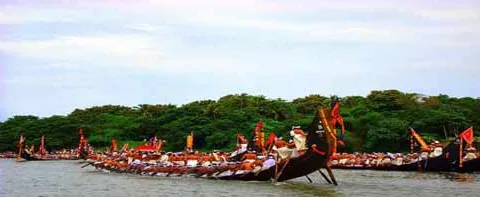
The stretch of river Pamba at aranmula is the venue of the famous snake boat race. It is more a pageantry than a race. The snake boat is of an exrtra ordinary shape with a length of about 100ft. The rear portion towering to a height of about 20ft. and the front portion tapering gradually. The boat resembles a snake with its hood raised. the race is held on the last day of the week long Onam festival to commemorate the crossing of the river by Lord Krishna. The participants cheerfully row up and down the river to the tune of songs known as Vanchippattu.
Parumala:
Mar Gregorios Metropolitan, a Saint of Malankara Orthodox Church is burried here. This is also a famous Christian pilgrim centre . The orma perunnal (Remembrance Day) is celebrated during November every year.
Help Line/Phone Number
Police Station:
Police Station
Pathanamthitta, Kerala.
Police station
Pandalam, Pathanamthitta, Kerala
Nearest Hospital:
Poyyanil Hospital
Kozhencherry, Pathanamthitta, Kerala.
Government Hospital
Elanthur, Elanthoor
Pathanamthitta, Kerala.
Changethu Bhaskaran Nair Memorial Hospital
Pathanamthitta, Kerala.
BODHI HOMOEOPATHY
ABAN TOWER, ABAN JUNCTION, PATHANAMTHITTA,
Kerala 689645 - Tel:09447364380
Muthoot Medical Centre
Pathanamthitta, Kerala.
Location info
-
Address: Pathanamthitta,Kearala
-
District: Pathanamthitta district
-
Nearest City: Pathanamthitta
-
Best time to visit: November to January
Mobile network coverage
Airtel, Jio, BSNL, and Vi all provide coverage across Kerala. 4G is reliable in Kochi, Thiruvananthapuram, Kozhikode, and along the coastal belt. Coverage may be weaker in remote sections of the Western Ghats, deep forest reserves, and certain backwater stretches. Most hotels, houseboats, and cafes in tourist areas offer free Wi-Fi.
Food & restaurants nearby
Food options are available in the nearest town. Kerala cuisine — fish curry, appam with stew, puttu, and Kerala sadhya — is widely available and famously delicious.
Hotels & accommodation nearby
Accommodation is available in the nearest town or city. Options range from homestays to luxury resorts. Kerala’s homestay network is excellent and offers authentic local experiences.
Climate & weather
Kerala has a tropical monsoon climate with warm, humid conditions year-round. The best time to visit is November to February, when temperatures are a pleasant 22°C–30°C with low humidity and clear skies. March–May is hot and humid (up to 36°C). The southwest monsoon (June–September) brings heavy rainfall — the landscape transforms into lush green and this is the best time for Ayurvedic treatments. The northeast monsoon (October–November) brings shorter showers. Hill stations (Munnar, Wayanad) remain cooler year-round.
Nearest petrol pump
Petrol pumps are available in the nearest town or on the approach road — check locally for the closest option.
Best time to visit Sabarimala Festival
Sabarimala Festival takes place according to the Malayalam calendar. The best time to witness this festival is during its scheduled dates, which vary annually. Most Kerala festivals occur between November and May (the dry season). Check the official dates from Kerala Tourism before planning your visit.
How to reach Sabarimala Festival
Nearest Airport: Thiruvananthapuram International Airport (TRV) (approximately 40 km). Nearest Railway Station: Chengannur Railway Station. The destination is well-connected by Kerala State Road Transport Corporation (KSRTC) buses and private taxis from major towns.
Timings & opening hours
Festival timings vary by event. Most temple festivals start in the morning with flag-hoisting ceremonies and continue through the evening with processions, cultural programs, and fireworks. Night processions typically start around 8:00 PM–9:00 PM and continue past midnight.
Entry fee & tickets
Most festival events are free to attend and watch. Processions and temple grounds can be accessed without charge. Special seating for fireworks viewing may cost INR 100–500. Some cultural performances during festivals may have ticketed entry.
Duration needed
Major festivals last 8–10 days. Visitors typically spend 2–3 hours per day watching key events. The main procession day requires 4–6 hours.
Safety tips
Very large crowds gather at Sabarimala Festival — keep your belongings secure and watch for pickpockets. Arrive early for a good viewing position of processions. Follow the instructions of festival volunteers and police. Keep children close and establish a meeting point in case of separation. Carry water and stay hydrated. Avoid bringing large bags or valuables to crowded festival grounds.
Things to carry
Comfortable shoes for walking and standing (crowds can be very large, seating may not be available), drinking water in a reusable bottle, a hat or cap, sunscreen and umbrella for day events, a light snack, earplugs (processions can be very loud with drums and fireworks), a camera (zoom lens recommended for procession shots), a power bank, and a small bag that can be secured against pickpockets.
Nearby visiting places
Sabarimala Temple, Aranmula Temple, Perunthanaruvi Waterfall, Gavi, Konni Elephant Camp, Pampa River, Kaviyoor Rock Cut Cave Temple
Nearest airport, railway & bus
Nearest Airport: Thiruvananthapuram International Airport (TRV) (approximately 40 km). Nearest Railway Station: Chengannur Railway Station. The destination is well-connected by Kerala State Road Transport Corporation (KSRTC) buses and private taxis from major towns.
Things to do at Sabarimala Festival
Witness the grand procession of caparisoned elephants, listen to traditional percussion ensembles (pancha vadyam, chenda melam), watch traditional performing arts (Kathakali, Theyyam, folk dances), enjoy the spectacular fireworks displays, taste festival-special food, shop at temporary festival markets, interact with local communities participating in the festivities, photograph the colourful events, and experience the unique cultural atmosphere of a Kerala festival.
Frequently asked questions
When does this festival take place? — Most Kerala festivals follow the Malayalam calendar (Kollavarsham). Dates vary annually — check the Kerala Tourism website or local sources for exact dates for your travel period. Is the festival free to attend? — Yes, all processions and public events are free. Special seating areas for fireworks or cultural programmes may have ticketed entry. How crowded is it? — Very crowded during major festivals. Large events like Thrissur Pooram attract hundreds of thousands of people. Arrive early, keep belongings secure, and establish meeting points. What should I wear? — Comfortable clothing suitable for standing in crowds. Modest dress is appreciated. Wear comfortable shoes.
Quick facts
- Type: Destination
- State: Kerala
- Category: Fairs And Festivals
Map & location view
This section is being updated and will be available shortly.
Photo gallery of Sabarimala Festival
Video gallery
Related destinations
Aaranmula Boat Race
Aranmula boat race is loacted in Aranmula, Near chengannurPathanamthitta District, Kerala, India. The Aranmula Boat Race is organized during the Onam festival which…
Aarattu
The Padmanabhaswamy Temple is 3 or 4 miles away from the Thiruvananathapuram Central Railway Station, Trivendrum, Kerala. This is an architectural wonder and a…
Aattachamayam
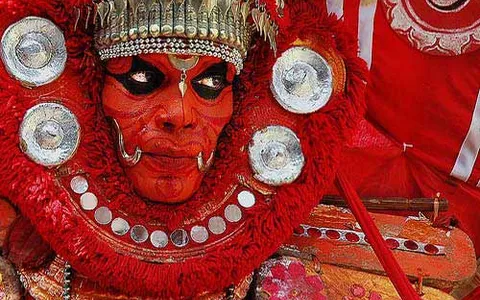
Athachamayam a colourful ceremony held at Thripunithura in Ernakulam District, Kerala.Onam, the state festival of Kerala, commences on the Atham asterism of the…