Pulikali
Pulikali is a colorful recreational folk art from the state of Kerala. It is performed by trained artists to entertain people. Is a 200 year old art, carefully preserved by the artists of the state. Puli Kali ("Puli" = Tiger & "Kali" = Play in Malayalam language) also known as Kaduvakali is a colorful recreational folk art from the state of Kerala. It is performed by trained artists to entertain people on the occasion of Onam, an annual harvest festival, celebrated mainly in the Indian state of…
About Pulikali
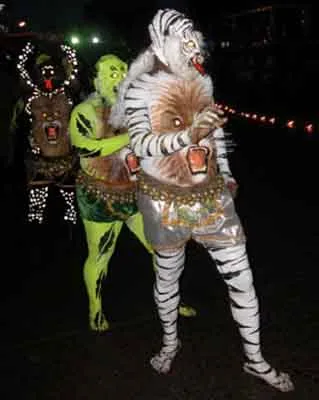
Pulikali is a colorful recreational folk art from the state of Kerala. It is performed by trained artists to entertain people. Is a 200 year old art, carefully preserved by the artists of the state. Puli Kali (“Puli” = Tiger & “Kali” = Play in Malayalam language) also known as Kaduvakali is a colorful recreational folk art from the state of Kerala. It is performed by trained artists to entertain people on the occasion of Onam, an annual harvest festival, celebrated mainly in the Indian state of Kerala. On the fourth day of Onam celebrations (Nalaam Onam), performers painted like tigers and hunters in bright yellow, red, and black dance to the beats of instruments like Udukku and Thakil. Literal meaning of Pulikali is the ‘play of the tigers’ hence the performance revolve around the theme of tiger hunting. The folk art is mainly practiced in Thrissur district of Kerala. Best place to watch the show is Swaraj Ground at Thrissur city on the fourth day of Onam, where Pulikali troupes from all over the district assemble to display their skills. The festival attracts thousands of people to the city.
There are enactments such as the tiger preying on a goat, and a tiger being hunted by a game-hunter. The made-up tigers present vigorous dancers to the loud beating of percussion instruments like udukku,thakil etc.
In Pulakali a group of performers(usually around 6 people who make up the troupe), have their bodies painted in the colors and patterns of a tiger, don tiger masks and perform a wild dance symbolizing the hunting rituals on a tiger hunt. The hunter and drummer play their parts realistically as the tiger guised men prance and leap ferociously. The play includes realistic scenes such as the tiger catching the goat, offered as bait and then the hunter capturing the tiger and so on.
The art is a simple and entertaining one. The cheering, roaring crowds fill the performers with vigor. However the pains taken by the artists need to be highlighted. The performers themselves get their bodies shaved the evening prior to the performance. After a family meal, the painting starts at night. Usually with a tigers picture in front, the painters work meticulously and painstakingly to create an exact likeness of a tiger. The tiger’s face is often painter on the chest of the performer. Often the shiny coat and dark spots of a leopard are also painted on a performer. Rarely a performer is also painted to be a black panther. The painters work patiently all night and the performers too take immense efforts to get the guise perfected. Often they stand all night in a windy area or under a fan to dry the paint.These were traditionally herbal or organic dyes but the use of commercial, synthesized paint is now in vogue as it dries faster and looks more impressive and shiny. But these are also harmful to the artists skin and often burn the newly shaved skin.
The instruments that are played to recreate the tiger hunting scenes are drums and percussions such as ‘Udukku’ and ‘Thakil’, ’Chenda“ and ‘Thappu’. The beats of these instruments create the atmosphere required for the spectator to vicariously eel the hunter’s thrill.
Earlier where 30-40 troupes had participated in a competitive spirit, hardly 6-7 troupes perform now; and the focus is to keep the art alive, rather than winning the prize. The urban population no longer takes delight in the art as in olden times. Local clubs are making an effort to keep the art alive and do organize performances. The local people pool in their resources. They also volunteer as painters. So street-shows of Pulikali are conducted in the district of Thrissur.
The Appearance
Striking feature of this folk art is the colorful appearance of the performers. To get the semblance of a tiger artists paint themselves in bright yellow with patterns of black and red. A tiger mask on the face completes the get up.
It is a painstaking job and artists spend a whole night prior to the performance day on their make-up. Patience of artists must be appreciated, as most paints contain toxic chemicals which create a burning sensation when applied on newly shaved bodies.
The Play
It is a wonderful sight to see humans in the guise of tigers roaming in the streets. Children, specifically take great delight in their performance as the entertainers dance, pounce and walk like a tiger. Scenes of tiger hunting goats and tiger being hunted by a human beings are also beautifully depicted by them. Beat for the dance movement is provided by percussion instruments like ‘udukku’ and ‘thakil’.
Getting there:
Nearest railway station: Thrissur, a few minutes drive from the Thekkinkadu Maidanam.
Nearest airport: Cochin International Airport, about 58 km from Thrissur town.
Interesting things to Visit
The Shakthan Thampuran Palace
The Shakthan Thampuran Palace, also known as Vadakkekara Palace was constructed by the great ruler of Cochin, Shakthan Thampuran and rebuilt in 1795 by Sri. Ramavarma Thampuran. The style of architecture bears considerable Dutch influences.
Anakkayam
Anakkayam is roughly 20 kms from Chalakudy on the Sholayar Peringalkuthu route, famous for its lake with cool and placid waters. The place got its name from a herd of elephants which used to visit the place quite often and the legend goes that the place got its name because some elephants had been drowned in this lake.
Cheruthuruthy (Kerala Kalamandalam)
North of Thrissur, 29km away near the Shoranur Railway Junction is Cheruthuruthy, home of the renowned repository of the tradition of the Kathakali dance form.
Vadakkumnathan Temple
This temple is a classic example of the Kerala style of architectrue. The temple contains the sacred shrines of Paramashiva, Parvathy, Sankaranarayana, Ganapathy, Sri Rama and Sri Krishna. The central shrines and Koothambalam exhibit exquisite vignettes carved in wood. Legend goes that this temple was founded by Parasurama. ’ Thrissur Pooram ’ the grandest temple pageantry in Kerala, is celebrated here in April -May every year.
Art Museum
Within the zoo compound is the small Art Museum which has a good collection of wood carvings metal sculptures, Kathakali figures, and ancient jewellery. There is also a wonderful collection of traditional Kerala lamps.
The Church of Our Lady of Dolors
The Church of Our Lady of Dolors, Thrissur is also known as the New Church and is the biggest church in South Asia.
Peechi Dam
Peechi Dam, 23km fromThrissur is an irrigation project site which offers boating facilities at the reservoir. If you are lucky, you might even spot a wild tusker or two on the forested banks, which form part of the 125 sq. km Peechi Vazhani Wildlife Sanctuary.
The Archeological & Art Museum at Thrissur
The Archeological & Art Museum at Thrissur is a depository of graceful stone sculptures, antique jewelry and intricately carved wooden handicrafts.
Thrissur Zoo
Thrissur Zoo houses a number of wildlife animals and attracts locals and tourists alike.
Punnathur Kotta
Near Guruvayur, 2km away, is ‘Punnathur Kotta’, the place where the temple elephants (numbering over 40) are taken care of. Nowhere else can so many elephants be seen at any one time.
Kerala Sahitya Academy
Kerala Sahitya Academy in collaboration with the Kendriya Sahitya Academy in New Delhi aims at encouraging Malayalam language and promoting its literature especially to the younger generations.
Guruvayur (Pilgrim Centre)
Thrissur is a good base for a pilgrim tripto Guruvayur, 32km away. It is among India’smost important pilgrimage centres and is also known as the Dwaraka of the South. The Sree Krishna Swamy Temple, which attracts thousands of pilgrims is said to date prior to the 16th centrury. Tradition has it that the temple was created by Guru - the preceptor of the Devas, and Vayu - the lord of the Winds.
Kerala Lalitha Kala Academy
Kerala Lalitha Kala Academy (1962) was established in an attempt to promote the performing and fine arts of the state which had fallen into a decline.
Vilangan Kunnu
Vilangan Kunnu in Thrissur is a recreational center and a picnic spot where various amusement devices for children have been constructed.
Kerala Sangeetha Nadaka Academy
Kerala Sangeetha Nadaka Academy in Thrissur was established to promote dance, theater and music in Kerala. Thanks to its efforts Thrissur can now boast of a theatre with all modern amenities.
Athirapally and Vazhachal Waterfalls
East of Chalakudy, near the entrance to the Sholayar forest ranges, are the beautiful waterfalls of Athirapally and Vazhachal, 5 km apart. These waterfalls are a place of scenic beauty , and is of 80 feet high.
Help Line/Phone Number
Police Station:
Viyyoor Police Station
Thrissur, Kerala, India
Ayyanthole Police Station
Thrissur, Thrissur, Kerala, India 0487 2363608
Peramangalam Police Station
Thrissur, Kerala, India
Anthikkad Police Station
Thrissur, Kerala, India
wadakanchery police station
Wadackanchery, Thrissur, Kerala, India 04884 233100
Police Station
Guruvayoor, Thrissur, Kerala, India
Police station
Kattoor Town, Thrissur, Kerala, India
Police Station
SH 22, Irinjalakuda, Thrissur, Kerala, India
Puvathur Police Station
Thrissur, Kerala, India
Police Station
Kodakara, Thrissur, Kerala, India
Nearest Hospital:
Modern Hospital Kodungallur
P.O. Box No:22, Kodungallur Post, Thrissur, Kerala 680664, India 0480 2802022
Nilayoram Resorts & Ayurvedic Centre
Painkulam Post, Cheruthuruthy, Thrissur, Kerala 679531, India 09847044244
Sree Chithra Ayur Home
Manathala, Chavakkad, Thrissur, Kerala 680506, India 09895091639
Danya Hospitals
Thrissur, Kerala, India
Location info
-
Address:Thrissur and Palaghat
-
District: Thrissur
-
Nearest City: Thrissur
-
Best time to visit: Onam
Mobile network coverage
Airtel, Jio, BSNL, and Vi all provide coverage across Kerala. 4G is reliable in Kochi, Thiruvananthapuram, Kozhikode, and along the coastal belt. Coverage may be weaker in remote sections of the Western Ghats, deep forest reserves, and certain backwater stretches. Most hotels, houseboats, and cafes in tourist areas offer free Wi-Fi.
Food & restaurants nearby
Food options are available in the nearest town. Kerala cuisine — fish curry, appam with stew, puttu, and Kerala sadhya — is widely available and famously delicious.
Hotels & accommodation nearby
Accommodation is available in the nearest town or city. Options range from homestays to luxury resorts. Kerala’s homestay network is excellent and offers authentic local experiences.
Climate & weather
Kerala has a tropical monsoon climate with warm, humid conditions year-round. The best time to visit is November to February, when temperatures are a pleasant 22°C–30°C with low humidity and clear skies. March–May is hot and humid (up to 36°C). The southwest monsoon (June–September) brings heavy rainfall — the landscape transforms into lush green and this is the best time for Ayurvedic treatments. The northeast monsoon (October–November) brings shorter showers. Hill stations (Munnar, Wayanad) remain cooler year-round.
Nearest petrol pump
Petrol pumps are available in the nearest town or on the approach road — check locally for the closest option.
Best time to visit Pulikali
Pulikali takes place according to the Malayalam calendar. The best time to witness this festival is during its scheduled dates, which vary annually. Most Kerala festivals occur between November and May (the dry season). Check the official dates from Kerala Tourism before planning your visit.
How to reach Pulikali
Nearest Airport: Cochin International Airport (COK) (approximately 0 km). Nearest Railway Station: Ernakulam Junction / Ernakulam Town Railway Station. The destination is well-connected by Kerala State Road Transport Corporation (KSRTC) buses and private taxis from major towns.
Timings & opening hours
Festival timings vary by event. Most temple festivals start in the morning with flag-hoisting ceremonies and continue through the evening with processions, cultural programs, and fireworks. Night processions typically start around 8:00 PM–9:00 PM and continue past midnight.
Entry fee & tickets
Most festival events are free to attend and watch. Processions and temple grounds can be accessed without charge. Special seating for fireworks viewing may cost INR 100–500. Some cultural performances during festivals may have ticketed entry.
Duration needed
Major festivals last 8–10 days. Visitors typically spend 2–3 hours per day watching key events. The main procession day requires 4–6 hours.
Safety tips
Very large crowds gather at Pulikali — keep your belongings secure and watch for pickpockets. Arrive early for a good viewing position of processions. Follow the instructions of festival volunteers and police. Keep children close and establish a meeting point in case of separation. Carry water and stay hydrated. Avoid bringing large bags or valuables to crowded festival grounds.
Things to carry
Comfortable shoes for walking and standing (crowds can be very large, seating may not be available), drinking water in a reusable bottle, a hat or cap, sunscreen and umbrella for day events, a light snack, earplugs (processions can be very loud with drums and fireworks), a camera (zoom lens recommended for procession shots), a power bank, and a small bag that can be secured against pickpockets.
Nearby visiting places
Fort Kochi, Mattancherry Palace, Cherai Beach, Bolghatty Island, Marine Drive, Chinese Fishing Nets, Hill Palace Museum, Kerala Kathakali Centre, St. Francis Church
Nearest airport, railway & bus
Nearest Airport: Cochin International Airport (COK) (approximately 0 km). Nearest Railway Station: Ernakulam Junction / Ernakulam Town Railway Station. The destination is well-connected by Kerala State Road Transport Corporation (KSRTC) buses and private taxis from major towns.
History of Pulikali
Pulikali is one of Kerala’s vibrant festivals that showcase the state’s rich cultural and religious diversity. Kerala’s festivals are renowned for their spectacular processions featuring caparisoned elephants, traditional percussion ensembles (pancha vadyam), colourful umbrellas, and fireworks. Many festivals are temple-related and follow the Malayalam calendar, creating a year-round cycle of celebrations that are an integral part of Kerala’s cultural identity. The festival reflects the unique syncretic traditions of Kerala where communities of all faiths participate in each other’s celebrations.
Things to do at Pulikali
Witness the grand procession of caparisoned elephants, listen to traditional percussion ensembles (pancha vadyam, chenda melam), watch traditional performing arts (Kathakali, Theyyam, folk dances), enjoy the spectacular fireworks displays, taste festival-special food, shop at temporary festival markets, interact with local communities participating in the festivities, photograph the colourful events, and experience the unique cultural atmosphere of a Kerala festival.
Frequently asked questions
When does this festival take place? — Most Kerala festivals follow the Malayalam calendar (Kollavarsham). Dates vary annually — check the Kerala Tourism website or local sources for exact dates for your travel period. Is the festival free to attend? — Yes, all processions and public events are free. Special seating areas for fireworks or cultural programmes may have ticketed entry. How crowded is it? — Very crowded during major festivals. Large events like Thrissur Pooram attract hundreds of thousands of people. Arrive early, keep belongings secure, and establish meeting points. What should I wear? — Comfortable clothing suitable for standing in crowds. Modest dress is appreciated. Wear comfortable shoes.
Quick facts
- Type: Destination
- State: Kerala
- Category: Fairs And Festivals
Map & location view
This section is being updated and will be available shortly.
Photo gallery of Pulikali
Video gallery
Related destinations
Aaranmula Boat Race
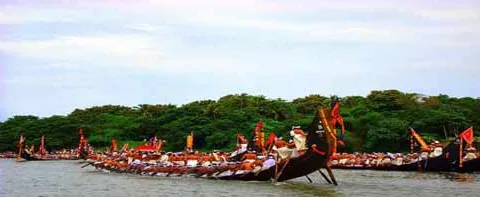
Aranmula boat race is loacted in Aranmula, Near chengannurPathanamthitta District, Kerala, India. The Aranmula Boat Race is organized during the Onam festival which…
Aarattu
The Padmanabhaswamy Temple is 3 or 4 miles away from the Thiruvananathapuram Central Railway Station, Trivendrum, Kerala. This is an architectural wonder and a…
Aattachamayam
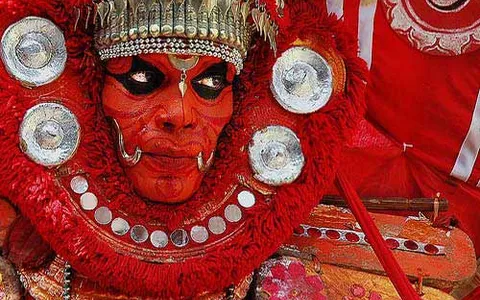
Athachamayam a colourful ceremony held at Thripunithura in Ernakulam District, Kerala.Onam, the state festival of Kerala, commences on the Atham asterism of the…