Find the Best Cosmetic Hospitals — Choose with Confidence
Discover top cosmetic hospitals in one place and take the next step toward the look you’ve been dreaming of.
“Your confidence is your power — invest in yourself, and let your best self shine.”
Compare • Shortlist • Decide smarter — works great on mobile too.
Why WiFi 6 Travel Routers Matter When You’re on the Move




When you’re traveling internationally — in airports, hotels, cafés, co-working spaces — your internet setup faces special challenges. A travel router with WiFi 6 (802.11ax) support is becoming a smart investment. Here’s why:
1. Handling crowded networks
WiFi 6 was designed precisely for environments with many devices and overlapping networks (think airports, hotel floors). It improves throughput per area, reduces latency and handles more simultaneous connections.
2. Better performance for all your devices
If you’re connecting a laptop, phone, tablet, maybe a streaming stick in your hotel room, WiFi 6 helps each device get better speed and responsiveness.
3. Security & stability in public WiFi environments
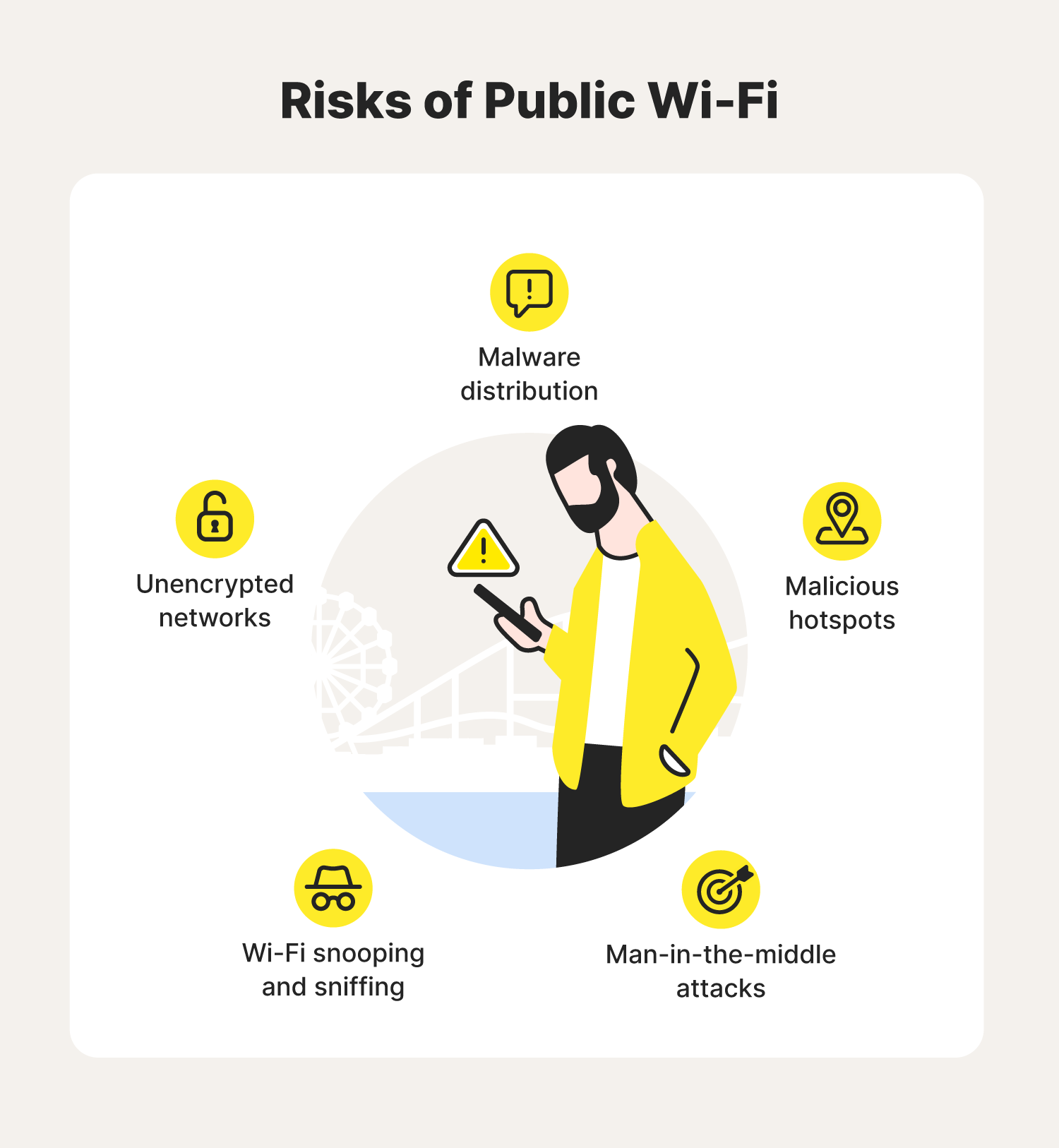
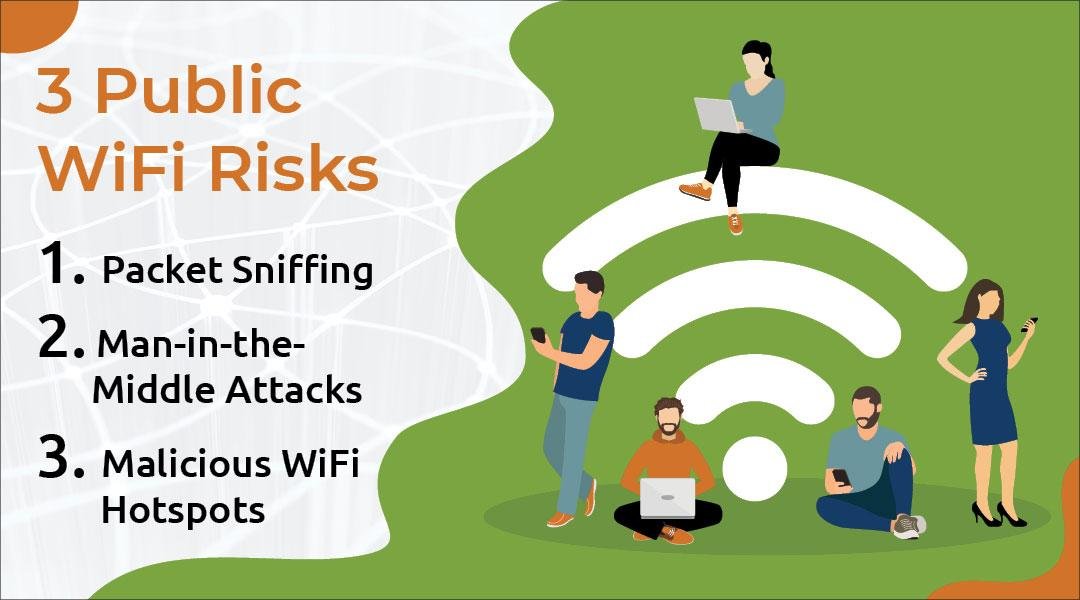
Public networks are inherently riskier: unencrypted, crowded, and often with tricky captive portals. A dedicated travel router adds a layer of insulation between you and the chaotic public WiFi.
4. Device limit & simplicity
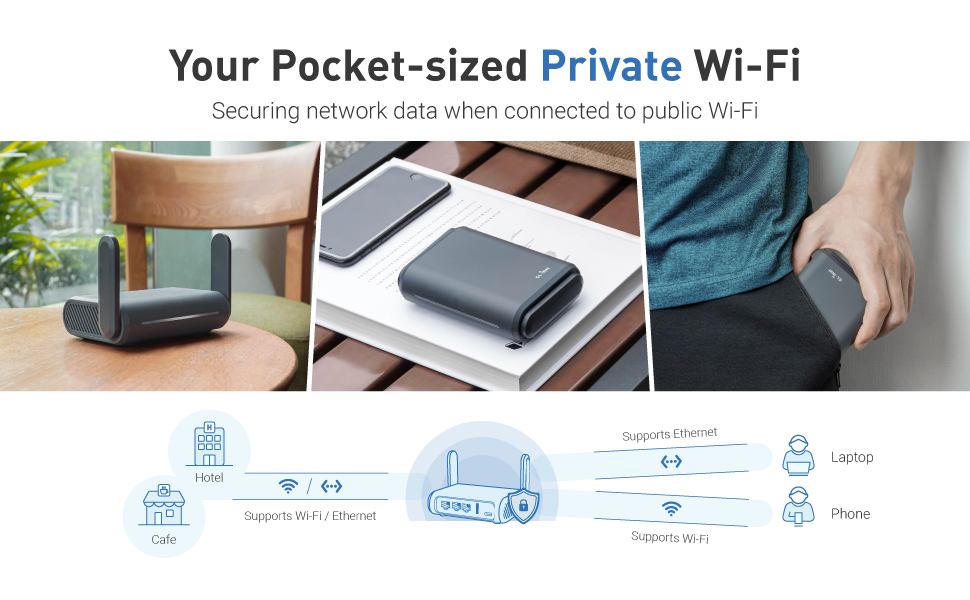
Hotels often limit the number of devices you can connect directly. A travel router lets you connect one time to the public WiFi (or wired Ethernet) and share that connection with all your gadgets through your personal WiFi network.
5. Global and multi-mode readiness
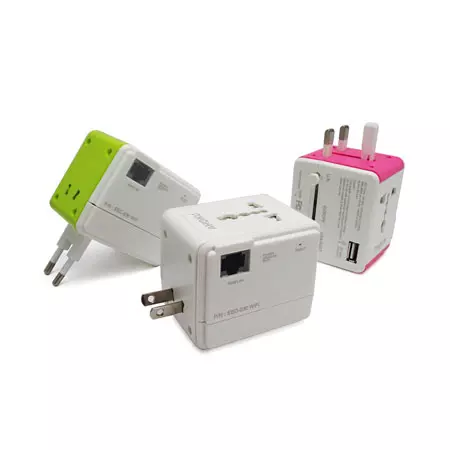
International travel means different power plugs, varying hotel infrastructure (Ethernet jacks, poor hotel WiFi, captive portals). A travel router built for that world (compact, USB-C or universal power, multiple modes) paired with WiFi 6 makes the experience smoother.
What to Look for: Key Features for Travel & Public Networks

Here are the factors that matter when choosing a travel router, especially with WiFi 6 in mind:
• WiFi Standard & Bands
Ensure the router supports WiFi 6 (802.11ax). Dual-band (2.4GHz + 5GHz) is basic; some models also offer newer bands. The WiFi 6 standard is built to handle more devices and better congested environments.
• Ethernet / WAN Options
Having at least one WAN (for hotel wired jack) and one LAN port is useful. Wired backhaul often gives more speed and stable connection than relying solely on hotel WiFi.
• Power Flexibility / Compact Size
Look for USB-C power or compatibility with power banks; compact size for carry-on. International travel means you may not always have easy access to a dedicated power adapter.
• Modes & Captive Portal Support
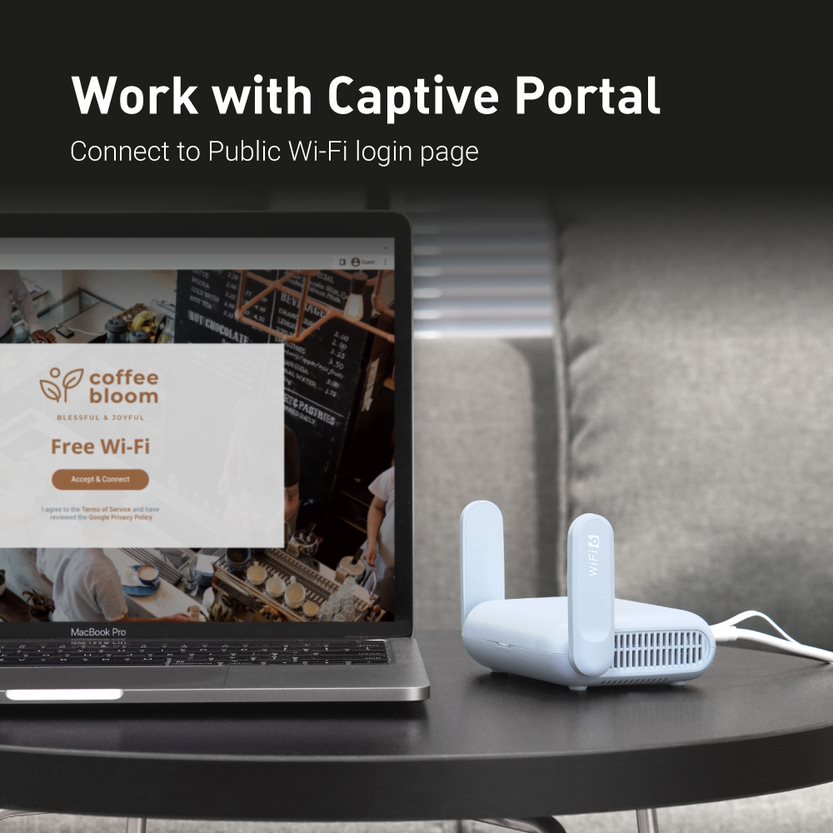
Flights, hotels, airports often use captive-portal web logins. Good travel routers support “client mode,” “repeater mode,” “bridge mode” and handle the login once. Then they broadcast your private WiFi.
• VPN / Security Features
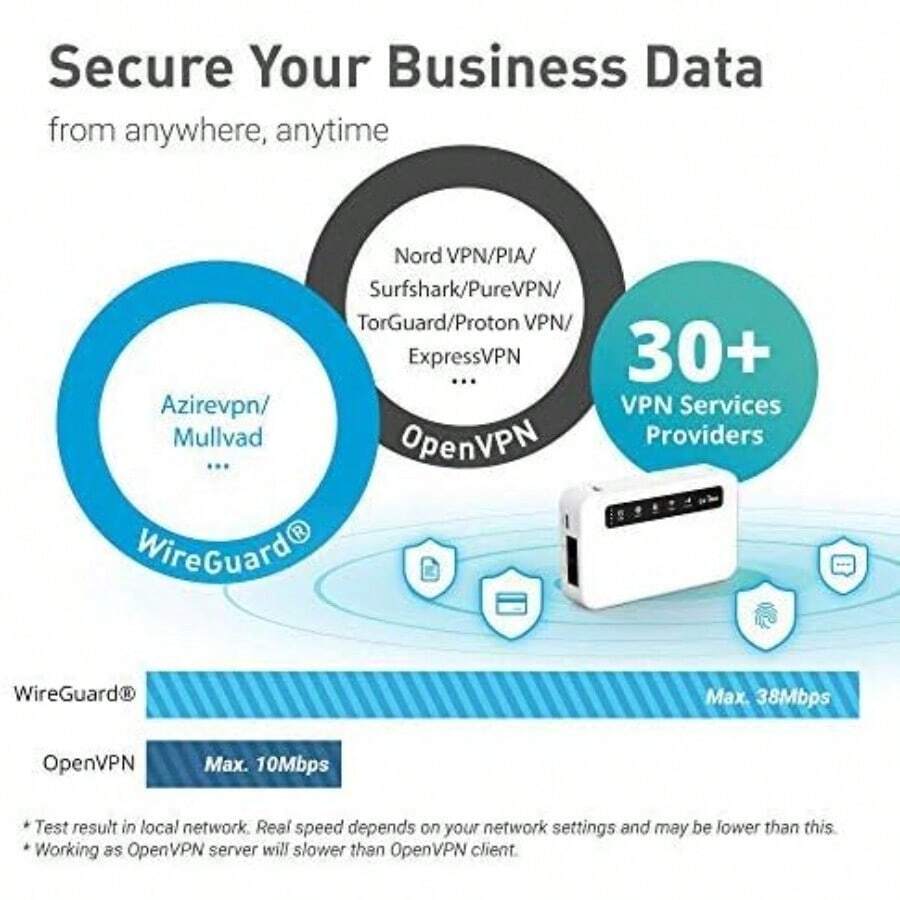
Built-in VPN client support (WireGuard, OpenVPN) is a major plus — you can protect all devices connected behind the router without installing VPN apps on each one. Also look for WPA3 support, guest networks, firewall features.
• International Ready
Check voltage/power compatibility, plug adapters, firmware region support. Also check that antenna and band settings are appropriate for the countries you visit.
• Portability & Multi-device Support
The router should support multiple devices (laptop, phone, tablet, streaming stick) simultaneously without collapsing. Good routers will advertise number of devices or show real-world testing. (PC Guide)
Top Models to Consider (WiFi 6 Travel Routers)
Here are some of the standout devices currently worth your attention:
- GL.iNet Beryl AX (GL-MT3000) – A strong choice for WiFi 6 travel use: compact, powerful, with travel-friendly features like VPN support and good port options.
- TP‑Link TL-WR3002X / AX1500 Travel Router – TP-Link’s recent travel router with WiFi 6 support, designed specifically for public WiFi/travel scenarios. (Business Wire)
- ASUS RT-AX57 Go or similar travel-optimized WiFi 6 models – For users who want high performance and are willing to invest a little more.
- InvizBox Go (WiFi 6 version) / travel privacy-first router – If security and privacy are your top criteria, a router with built-in VPN + WiFi 6 is ideal.
- Budget / Lightweight Options – If you travel light and don’t need ultra high speeds, there are lower-cost WiFi 6 travel routers that still give you the essentials (dual band, captive portal support, decent portability).
Deployment Tips: How to Use It on the Road


Here’s a typical workflow when you’re at a hotel or airport and want to set up your WiFi 6 travel router:
- Power up your travel router via USB-C or mains.
- Connect the router to the hotel’s internet source:
- If the room has a wired Ethernet jack: connect router WAN port to it.
- Otherwise: connect the router to the hotel WiFi network in “client mode” or “Repeater mode.”
- Complete the captive-portal login (the browser page where you enter room number / credentials) using one of your devices connected to the router’s temporary WiFi. Once logged in, the router holds the connection.
- Now connect your devices (phone, laptop, tablet) to the router’s private SSID.
- Enable VPN or security settings on the router if available (recommended for public networks).
- Browse/stream/work with all your devices behind your personal network — one login, better security, fewer device-limit issues.
- If you leave the room or move location: unplug or switch power; your devices simply reconnect to your router’s SSID as before.
Final Thoughts
Traveling internationally and relying on public networks is easier and safer with a well-chosen WiFi 6 travel router. It gives you speed, reliability, better device handling, and security — all in a compact form factor made for the road.
If you travel often, invest in a good one: you’ll avoid endless login loops, device-limits, flaky hotel WiFi, and get peace of mind knowing all your devices are protected behind your own network.

I am a passionate traveler, city explorer, and digital publisher focused on documenting real journeys, local cultures, and everyday travel experiences across India and beyond. Through my platforms, I share practical travel guides, city blogs, and daily travel logs that help readers explore destinations with confidence and local insight.
I am the creator of HolidayLandmark, a travel-focused ecosystem covering destinations, stories, and experiences through blogs, social platforms, and curated travel content:
- Instagram – HolidayLandmark
- Facebook – HolidayLandmark
- YouTube – HolidayLandmark
- LinkedIn – HolidayLandmark
- X (Twitter) – HolidayLandmark
- HolidayLandmark on Blogger
- HolidayLandmark on WordPress
- HolidayLandmark Stories
Alongside HolidayLandmark, I manage multiple city-focused travel portals where I publish daily travel logs and in-depth city blogs covering local attractions, food, culture, and real traveler experiences:
City Daily Travel Logs
- Bangalore Orbit – Daily Logs
- Bhopal Orbit – Daily Logs
- Chennai Orbit – Daily Logs
- Gujarat Orbit – Daily Logs
- Kerala Orbit – Daily Logs
- Mera Apna Bihar – Daily Logs
- Mumbai Orbit – Daily Logs
City Blogs & Travel Guides
- Bangalore Orbit – Blog
- Bhopal Orbit – Blog
- Chennai Orbit – Blog
- Gujarat Orbit – Blog
- Kerala Orbit – Blog
- Mera Apna Bihar – Blog
- Mumbai Orbit – Blog
Through these platforms, my goal is to create a connected travel network that offers reliable city information, real-time travel experiences, and practical guidance for travelers, explorers, and local enthusiasts.