MOTOSHARE 🚗🏍️
Rent Bikes & Cars Directly from Owners
Motoshare connects vehicle owners with people who need bikes and cars on rent. Owners earn from idle vehicles, and renters get flexible ride options.
Visit Motoshare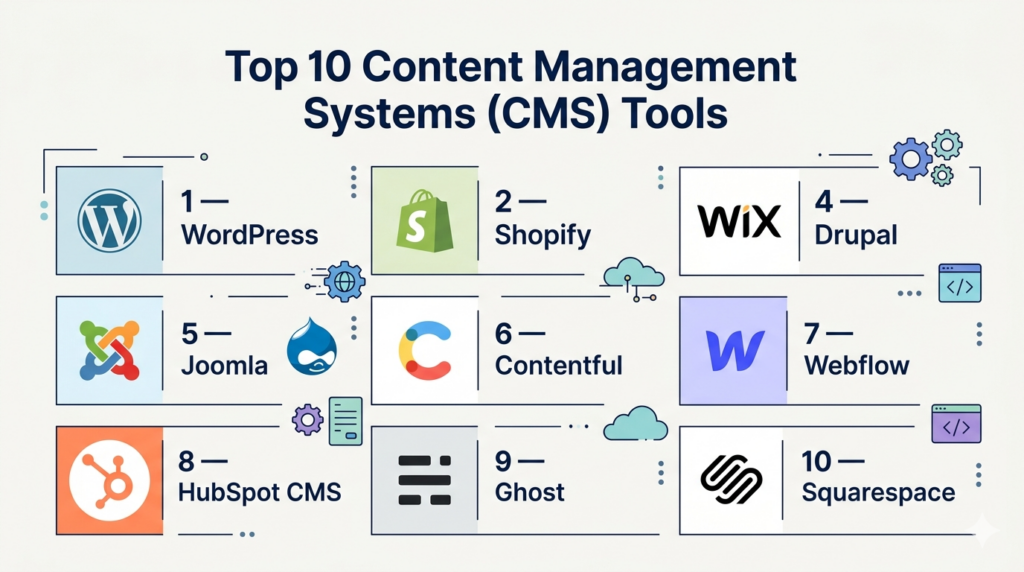
Introduction
Content Management Systems (CMS) are software platforms that allow users to create, manage, organize, and publish digital content—primarily websites—without requiring deep technical expertise. A CMS provides an interface for editing content, managing media, controlling design, and handling workflows, all in one place.
In modern digital operations, CMS platforms are foundational for businesses that rely on content for marketing, communication, and customer engagement. From blogs and corporate websites to eCommerce stores and enterprise portals, CMS tools enable faster publishing, collaboration, and scalability.
Common use cases include:
- Building and managing websites and blogs
- Publishing marketing content and landing pages
- Managing eCommerce storefronts
- Creating knowledge bases and documentation portals
- Delivering content across multiple channels (web, mobile, apps)
What buyers should evaluate:
- Ease of use and content editing experience
- Customization and flexibility (themes, plugins, APIs)
- Performance and scalability
- SEO capabilities and content optimization tools
- Security features and update frequency
- Integration with marketing, analytics, and CRM tools
- Headless CMS capabilities for omnichannel delivery
- Hosting and deployment options
- Community and ecosystem support
Best for: Marketers, content teams, developers, agencies, and enterprises managing digital experiences.
Not ideal for: Users who only need static websites or minimal content updates.
Key Trends in Content Management Systems (CMS)
- Headless CMS adoption: Decoupling frontend and backend for omnichannel delivery
- AI-assisted content creation: Automated writing, personalization, and optimization
- Composable architecture: Modular systems integrating best-of-breed tools
- API-first platforms: Enabling flexible integrations and custom applications
- Low-code/no-code interfaces: Empowering non-technical users
- Cloud-native CMS: Scalable and managed infrastructure
- Personalization engines: Delivering targeted content experiences
- Security-first design: Enhanced protection against web vulnerabilities
- Multilingual and localization support: Global content delivery
How We Selected These Tools (Methodology)
- Evaluated market adoption and popularity
- Assessed content management capabilities and flexibility
- Reviewed ease of use for non-technical users
- Analyzed integration ecosystems and plugin marketplaces
- Considered performance and scalability
- Included tools for enterprise, SMB, and developers
- Evaluated headless and traditional CMS options
- Reviewed security practices and update cycles
- Balanced open-source and commercial solutions
Top 10 Content Management Systems (CMS) Tools
#1 — WordPress
Short description: The most widely used CMS, offering flexibility for blogs, websites, and enterprise applications.
Key Features
- Extensive plugin ecosystem
- Thousands of themes
- SEO-friendly structure
- Content editor (block-based)
- Media management
- Custom post types
Pros
- Highly customizable
- Large global community
Cons
- Requires maintenance
- Security depends on plugins
Platforms / Deployment
Web / Self-hosted
Security & Compliance
Varies; depends on hosting and plugins
Integrations & Ecosystem
Massive ecosystem with plugins and integrations.
- SEO tools
- eCommerce (WooCommerce)
- Analytics tools
- APIs
Support & Community
Extremely large community and resources
#2 — Shopify
Short description: A leading CMS for eCommerce, enabling businesses to build and manage online stores.
Key Features
- Storefront builder
- Payment integration
- Inventory management
- Mobile optimization
- App marketplace
Pros
- Easy to use
- Fully managed platform
Cons
- Limited customization compared to open-source
- Transaction fees
Platforms / Deployment
Web
Cloud
Security & Compliance
Encryption, PCI compliance
Integrations & Ecosystem
- Payment gateways
- Marketing tools
- APIs
Support & Community
Strong support and documentation
#3 — Wix
Short description: A user-friendly CMS with drag-and-drop website building capabilities.
Key Features
- Drag-and-drop editor
- Templates
- App marketplace
- SEO tools
- Hosting included
Pros
- Very easy to use
- No coding required
Cons
- Limited flexibility
- Hard to scale
Platforms / Deployment
Web
Cloud
Security & Compliance
Not publicly stated
Integrations & Ecosystem
- Apps marketplace
- Marketing tools
Support & Community
Good support for beginners
#4 — Drupal
Short description: A powerful open-source CMS designed for complex and enterprise-level websites.
Key Features
- Advanced content modeling
- Role-based permissions
- High scalability
- Multilingual support
- Custom workflows
Pros
- Highly secure
- Flexible for complex projects
Cons
- Steep learning curve
- Requires technical expertise
Platforms / Deployment
Web / Self-hosted
Security & Compliance
Strong security reputation; specifics vary
Integrations & Ecosystem
- APIs
- Enterprise integrations
Support & Community
Strong developer community
#5 — Joomla
Short description: A flexible open-source CMS balancing ease of use and customization.
Key Features
- Content management tools
- Multilingual support
- Extensions marketplace
- User management
- Templates
Pros
- More flexible than basic builders
- Good community support
Cons
- Smaller ecosystem than WordPress
- Learning curve
Platforms / Deployment
Web / Self-hosted
Security & Compliance
Varies
Integrations & Ecosystem
- Extensions
- APIs
Support & Community
Active community
#6 — Contentful
Short description: A headless CMS designed for developers building modern digital experiences.
Key Features
- API-first architecture
- Content modeling
- Multi-channel delivery
- Developer tools
- Cloud hosting
Pros
- Highly scalable
- Great for omnichannel
Cons
- Requires development skills
- Expensive for large usage
Platforms / Deployment
Web
Cloud
Security & Compliance
Enterprise-grade security; details vary
Integrations & Ecosystem
- APIs
- Frontend frameworks
- Cloud tools
Support & Community
Strong documentation
#7 — Webflow
Short description: A visual CMS combining design, development, and hosting in one platform.
Key Features
- Visual design editor
- CMS collections
- Hosting included
- Responsive design
- SEO tools
Pros
- Design flexibility
- No-code capabilities
Cons
- Learning curve for beginners
- Pricing tiers
Platforms / Deployment
Web
Cloud
Security & Compliance
Not publicly stated
Integrations & Ecosystem
- APIs
- Marketing tools
Support & Community
Growing community
#8 — HubSpot CMS
Short description: A CMS integrated with marketing, CRM, and automation tools.
Key Features
- CRM integration
- Personalization tools
- Drag-and-drop editor
- SEO recommendations
- Analytics
Pros
- All-in-one platform
- Great for marketing teams
Cons
- Expensive
- Limited flexibility
Platforms / Deployment
Web
Cloud
Security & Compliance
Enterprise-grade security; details vary
Integrations & Ecosystem
- CRM
- Marketing automation
- APIs
Support & Community
Strong support ecosystem
#9 — Ghost
Short description: A modern CMS focused on publishing and content-driven websites.
Key Features
- Clean writing interface
- Membership and subscriptions
- SEO optimization
- Fast performance
- API access
Pros
- Excellent for bloggers
- Fast and lightweight
Cons
- Limited customization
- Smaller ecosystem
Platforms / Deployment
Web / Self-hosted / Cloud
Security & Compliance
Not publicly stated
Integrations & Ecosystem
- APIs
- Publishing tools
Support & Community
Active community
#10 — Squarespace
Short description: A design-focused CMS for creating visually appealing websites with ease.
Key Features
- Templates
- Drag-and-drop builder
- Hosting included
- eCommerce features
- SEO tools
Pros
- Beautiful designs
- Easy setup
Cons
- Limited customization
- Less flexible
Platforms / Deployment
Web
Cloud
Security & Compliance
Not publicly stated
Integrations & Ecosystem
- Built-in tools
- Limited third-party integrations
Support & Community
Good customer support
Comparison Table (Top 10)
| Tool Name | Best For | Platform(s) Supported | Deployment | Standout Feature | Public Rating |
|---|---|---|---|---|---|
| WordPress | General websites | Web | Self-hosted | Plugin ecosystem | N/A |
| Shopify | eCommerce | Web | Cloud | Store management | N/A |
| Wix | Beginners | Web | Cloud | Drag-and-drop builder | N/A |
| Drupal | Enterprise | Web | Self-hosted | Scalability | N/A |
| Joomla | Flexible CMS | Web | Self-hosted | Multilingual support | N/A |
| Contentful | Headless CMS | Web | Cloud | API-first | N/A |
| Webflow | Designers | Web | Cloud | Visual design | N/A |
| HubSpot CMS | Marketing teams | Web | Cloud | CRM integration | N/A |
| Ghost | Publishing | Web | Hybrid | Speed | N/A |
| Squarespace | Design websites | Web | Cloud | Templates | N/A |
Evaluation & Scoring of Content Management Systems (CMS)
| Tool Name | Core (25%) | Ease (15%) | Integrations (15%) | Security (10%) | Performance (10%) | Support (10%) | Value (15%) | Weighted Total |
|---|---|---|---|---|---|---|---|---|
| WordPress | 10 | 7 | 10 | 7 | 8 | 9 | 9 | 8.9 |
| Shopify | 9 | 9 | 8 | 9 | 9 | 9 | 7 | 8.7 |
| Wix | 7 | 10 | 6 | 7 | 7 | 8 | 8 | 7.8 |
| Drupal | 9 | 5 | 8 | 9 | 9 | 8 | 8 | 8.1 |
| Joomla | 8 | 6 | 7 | 8 | 8 | 7 | 8 | 7.6 |
| Contentful | 9 | 7 | 9 | 9 | 9 | 8 | 7 | 8.5 |
| Webflow | 8 | 8 | 7 | 8 | 8 | 7 | 7 | 7.8 |
| HubSpot CMS | 9 | 8 | 9 | 9 | 9 | 9 | 6 | 8.6 |
| Ghost | 7 | 9 | 6 | 7 | 9 | 7 | 8 | 7.8 |
| Squarespace | 7 | 9 | 6 | 7 | 7 | 8 | 7 | 7.5 |
How to interpret scores:
- Higher scores indicate better overall capability
- Enterprise tools excel in scalability and integrations
- Beginner tools score high on ease of use
- Value reflects cost vs features
- Choose based on your technical needs and growth plans
Which Content Management System (CMS) Is Right for You?
Solo / Freelancer
Use Wix, Squarespace, or Ghost for ease and quick setup.
SMB
WordPress or Shopify for flexibility and growth.
Mid-Market
Webflow or HubSpot CMS for marketing and scalability.
Enterprise
Drupal or Contentful for complex, large-scale applications.
Budget vs Premium
- Budget: WordPress, Ghost
- Premium: HubSpot CMS, Contentful
Feature Depth vs Ease of Use
- Advanced: Drupal, Contentful
- Easy: Wix, Squarespace
Integrations & Scalability
- Best: WordPress, Contentful
Security & Compliance Needs
- Strong: Drupal, HubSpot
Frequently Asked Questions (FAQs)
What is a CMS?
A CMS is software that helps create and manage website content.
Do I need coding skills?
Not for most CMS platforms, especially no-code tools.
What is headless CMS?
A CMS that separates backend content from frontend display.
Which CMS is best for beginners?
Wix and Squarespace are beginner-friendly.
Is WordPress free?
The core software is free; hosting and plugins may cost.
Can CMS handle eCommerce?
Yes, platforms like Shopify and WordPress (WooCommerce) support it.
Are CMS platforms secure?
Security varies; regular updates and best practices are important.
Can I switch CMS later?
Yes, but migration can be complex.
What is the difference between CMS and website builder?
CMS offers more flexibility; builders focus on ease of use.
How do I choose a CMS?
Consider ease of use, scalability, integrations, and budget.
Conclusion
Content Management Systems (CMS) are essential for building and managing digital experiences. Whether you need a simple website or a complex enterprise platform, CMS tools provide the flexibility and scalability required.

One aspect that often becomes critical after CMS adoption is content deployment governance across multiple environments. As organizations grow, managing content promotions between staging, QA, and production environments can become just as important as the publishing experience itself. Evaluating rollback capabilities, audit trails, approval workflows, and integration with CI/CD pipelines early can prevent operational bottlenecks and reduce the risk of unintended content changes reaching production.